
Why reports go unread
Clients do not ignore reports because they are not interested. They ignore them because the report makes them do the work: interpret twenty charts, guess which numbers matter, and work out whether the month went well. A dashboard screenshot is data, not a report.
The person reading is usually a business owner or a manager with little time. Write for them. If they read only the first paragraph, they should still know how the month went.
Start with a summary in three lines
Open every report with a short summary, written by a person, not generated from a template:
- The main thing we delivered this month.
- The most important change in the numbers we measure together, up or down.
- The main thing planned for next month, and anything we need from you.
Everything else in the report supports these three lines.
What to include
After the summary, keep the same sections every month so the client learns where to look:
- Work done: the deliverables completed, in plain words. "Rewrote the three service pages" rather than "on-page optimisation".
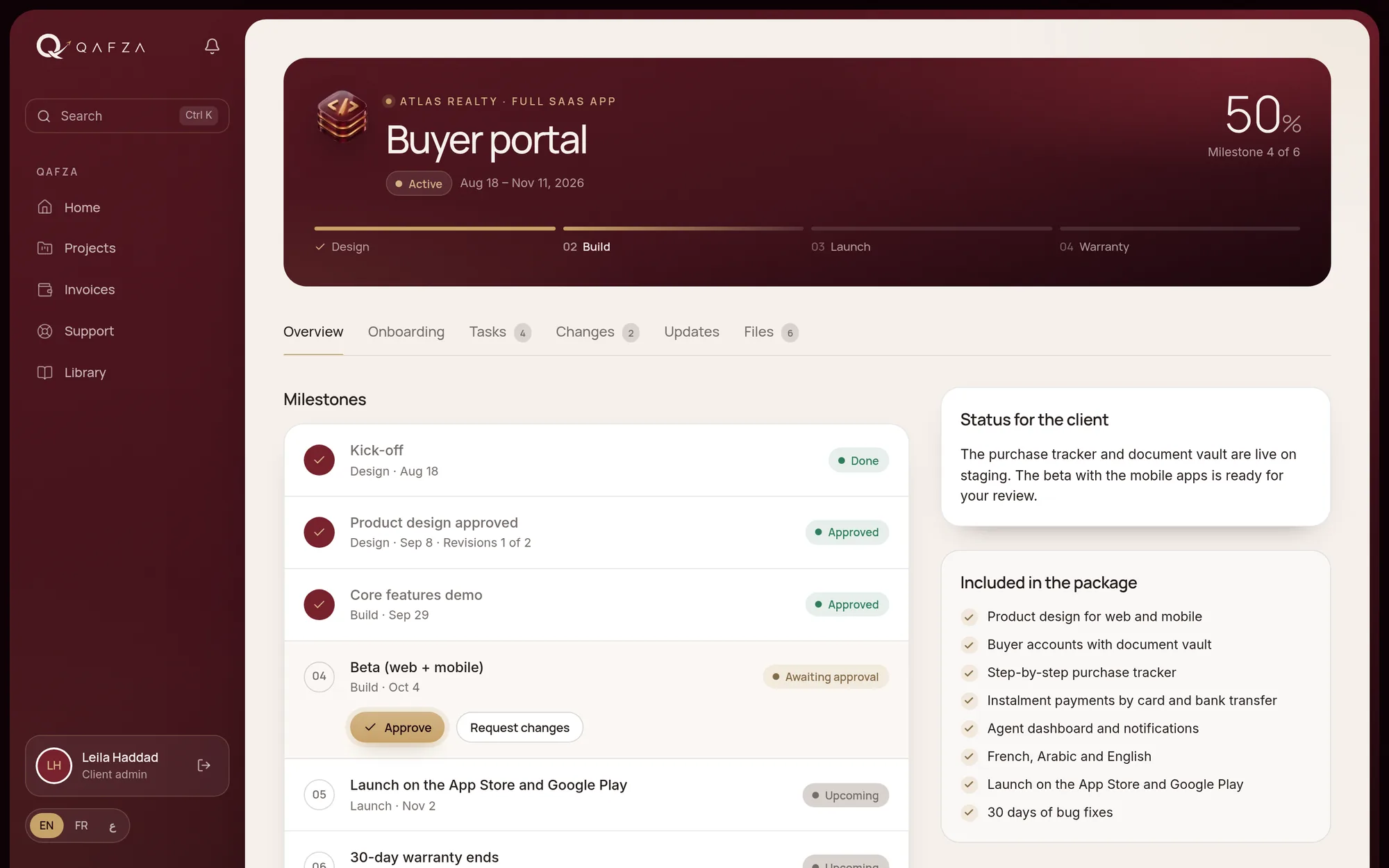
- Milestones: what was reached, what was approved, what is waiting on the client.
- Results measured: the few numbers you agreed with the client at the start, compared with last month and, when relevant, the same month last year.
- Support and maintenance: requests handled, response times, any incidents and what was done.
- Next month: the planned work, the dates, and what you need from the client to keep them.
What to leave out
A shorter report is not a lazier report. Leave out what does not help the client decide anything:
- Raw exports and every available chart.
- Numbers without context: impressions or followers on their own say little.
- Internal detail: who worked on what, tools used, hours spent, unless the client buys time.
- Jargon. If a term needs explaining, explain it once or replace it.
A report is not proof that the agency was busy. It is an account of what changed for the client.
Agree the format at kickoff
Show the client a sample report during onboarding and ask what they want from it. Some owners want one page; a marketing manager may want the detail behind each number. Agree the few measures, the sending day and who receives it. Ask also which decisions the report should help them make each month, such as whether to keep a campaign running or which service pages to improve next. A report built around the client's own decisions gets read, because it answers questions they actually have.
Measure, do not promise
The numbers in a report should be the ones agreed at the start of the engagement, together with the client: calls and enquiries from the website, bookings, rankings for a defined list of searches, cost per lead on paid campaigns. Record where each one stood before the work began, so every report compares against a real starting point.
Then report them honestly, including the months when they go down. Explain what you think caused the change and what you are doing about it. An agency cannot promise rankings or a number of leads; nobody controls search engines or buyers. What it can promise is the work, the dates, the quality and an honest account of the results, measured with the client.
Using Search Console and ads data
For SEO work, Google Search Console is the most useful source: clicks, impressions, average position and the searches that bring visitors to each page. Show the change in clicks and the searches that moved, not just a line chart. Compare equal periods, and mention seasonal effects when they apply.
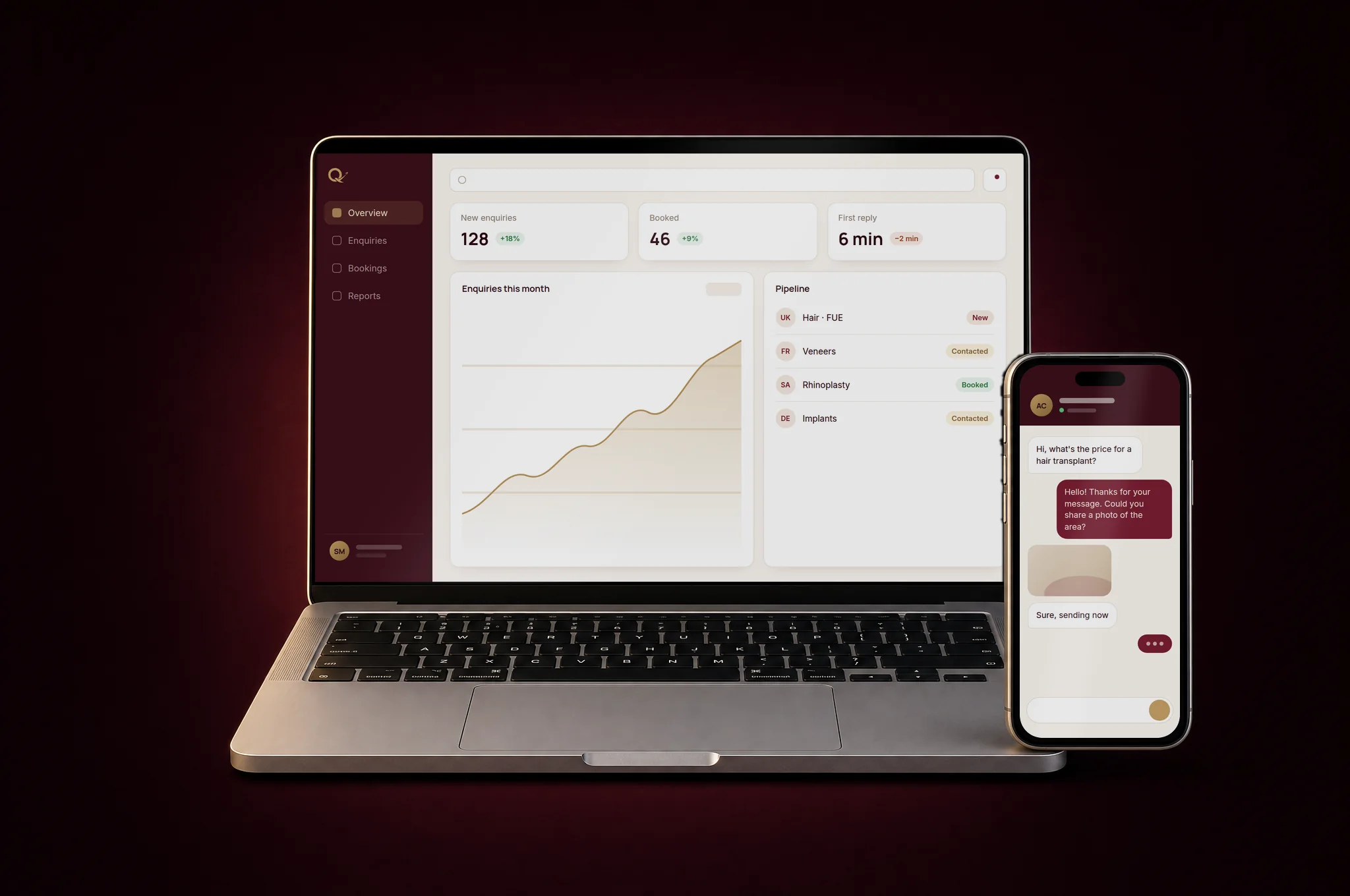
For paid campaigns, report spend, the leads or sales the platform recorded and the resulting cost per lead, and say which conversions are counted. Be clear that each platform measures in its own way, and that the client's own records, such as calls received or sales closed, are the final check. Where possible, pull the data automatically each month, so the report is built from the same sources in the same way every time.
Send it on a fixed day
Choose a day and keep it, for example within the first five working days of the month. A report that arrives on the same day every month becomes part of the client's routine; one that arrives "when we have time" signals that the work is not a priority either.
Make it easy to read on a phone and easy to print. Keep the same structure month after month, and store past reports where the client can find them, so they can look back without asking.
If something important happens during the month, such as a site outage or a campaign that stops delivering, do not wait for the report. Tell the client the same day, and let the report record what happened and what was done about it.
Close the loop
End the report with a question or an invitation: a short call to discuss the next quarter, a decision you need, or simply an offer to answer questions. A report that leads to a conversation is worth more than one that is filed. Note what the client says, and let it shape next month's plan.
How we report at Qafza
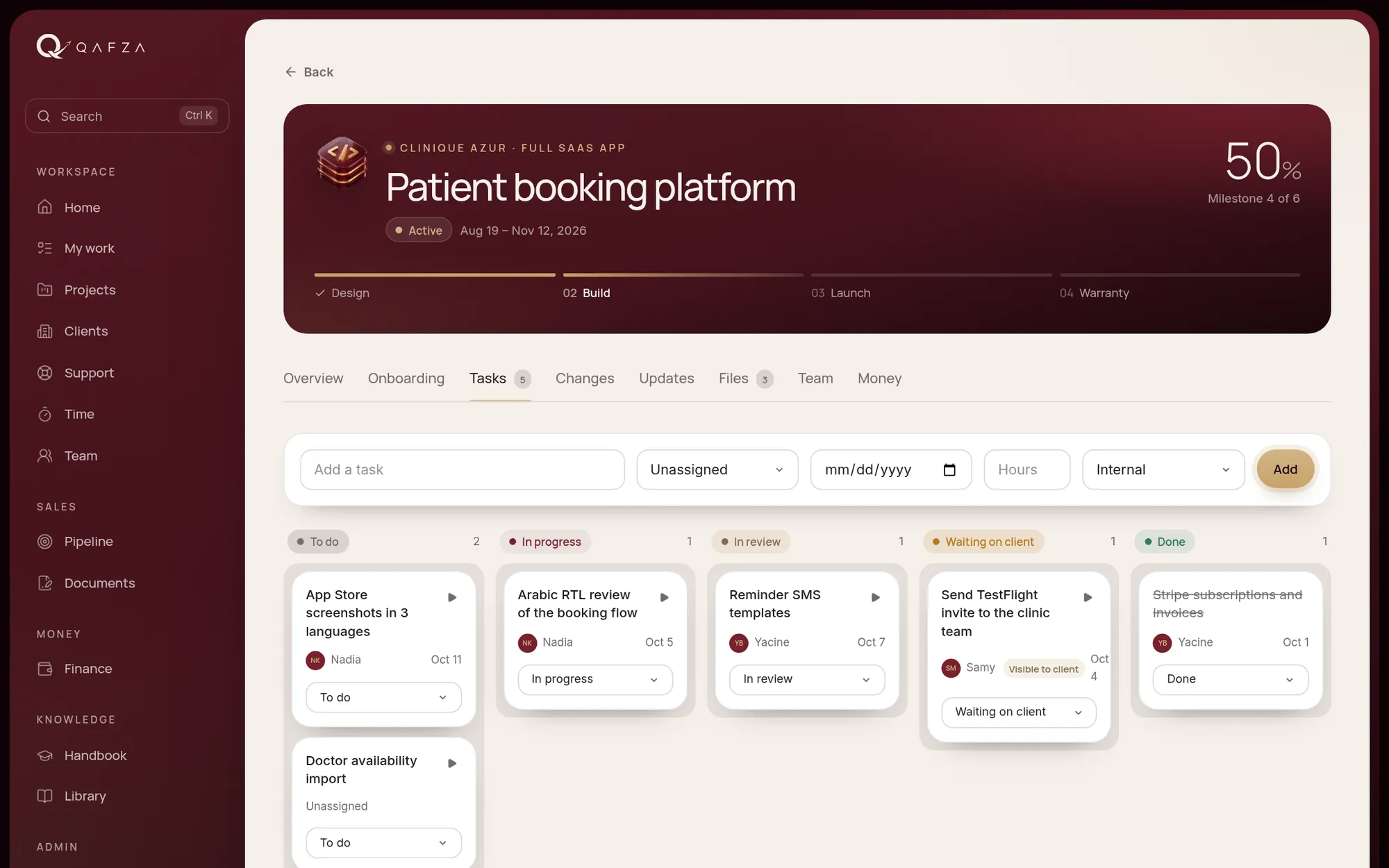
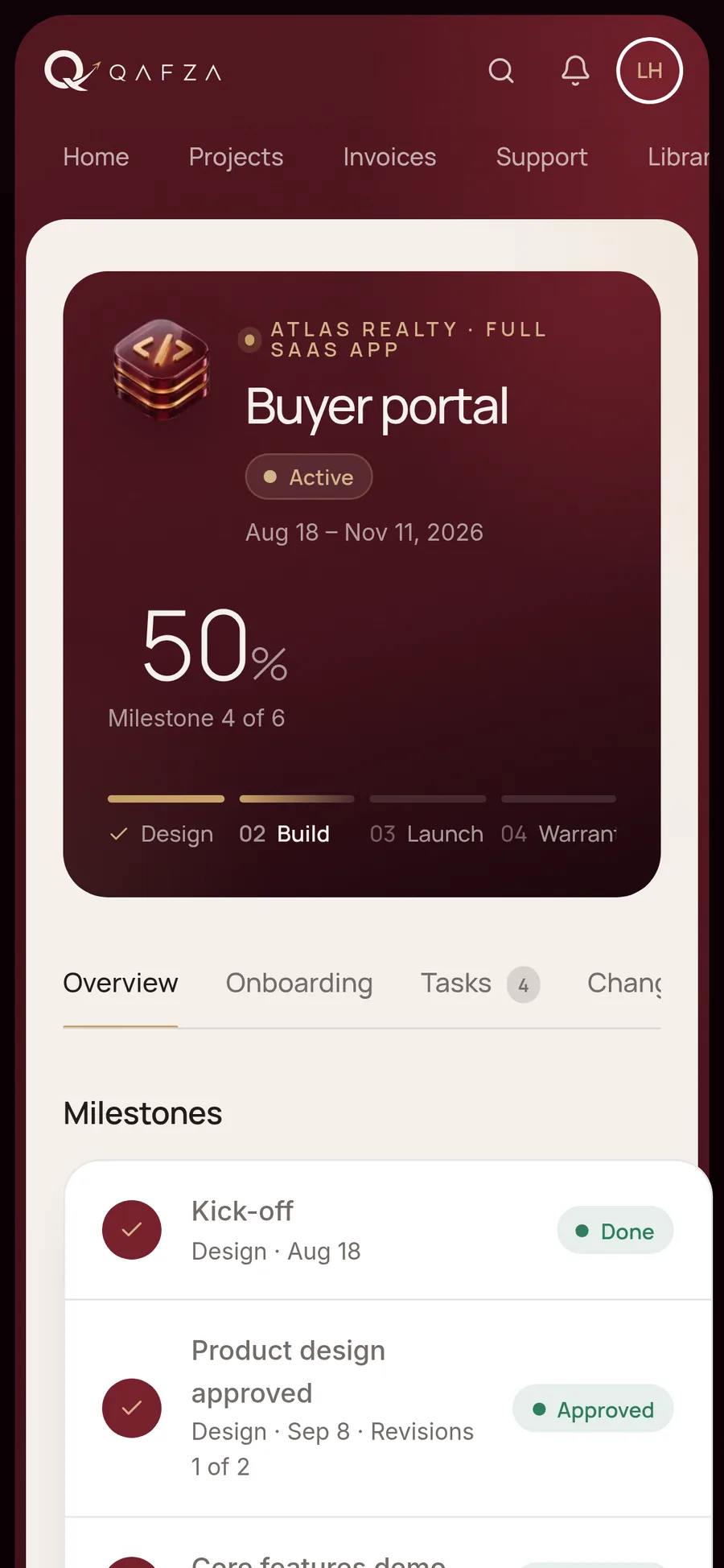
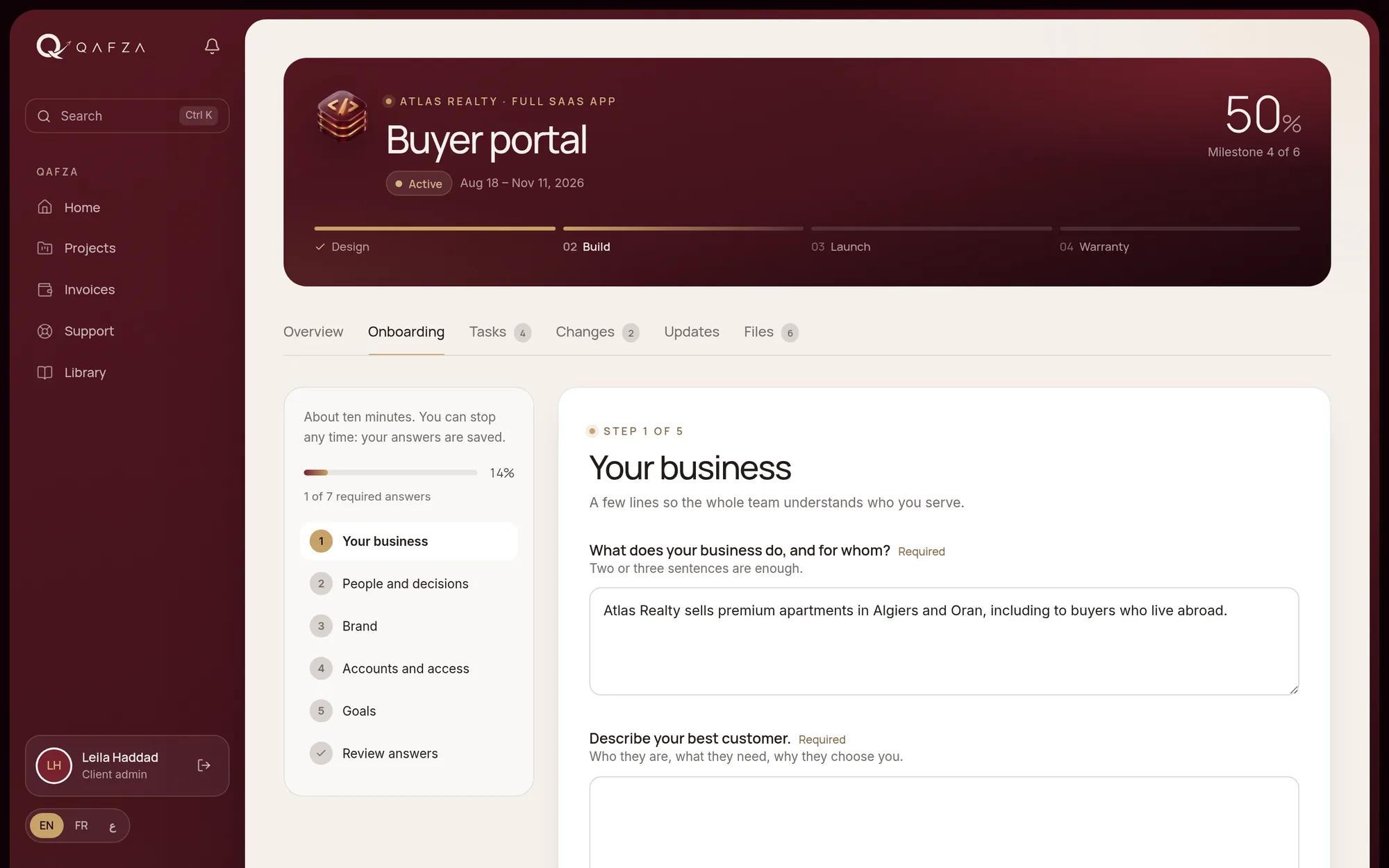
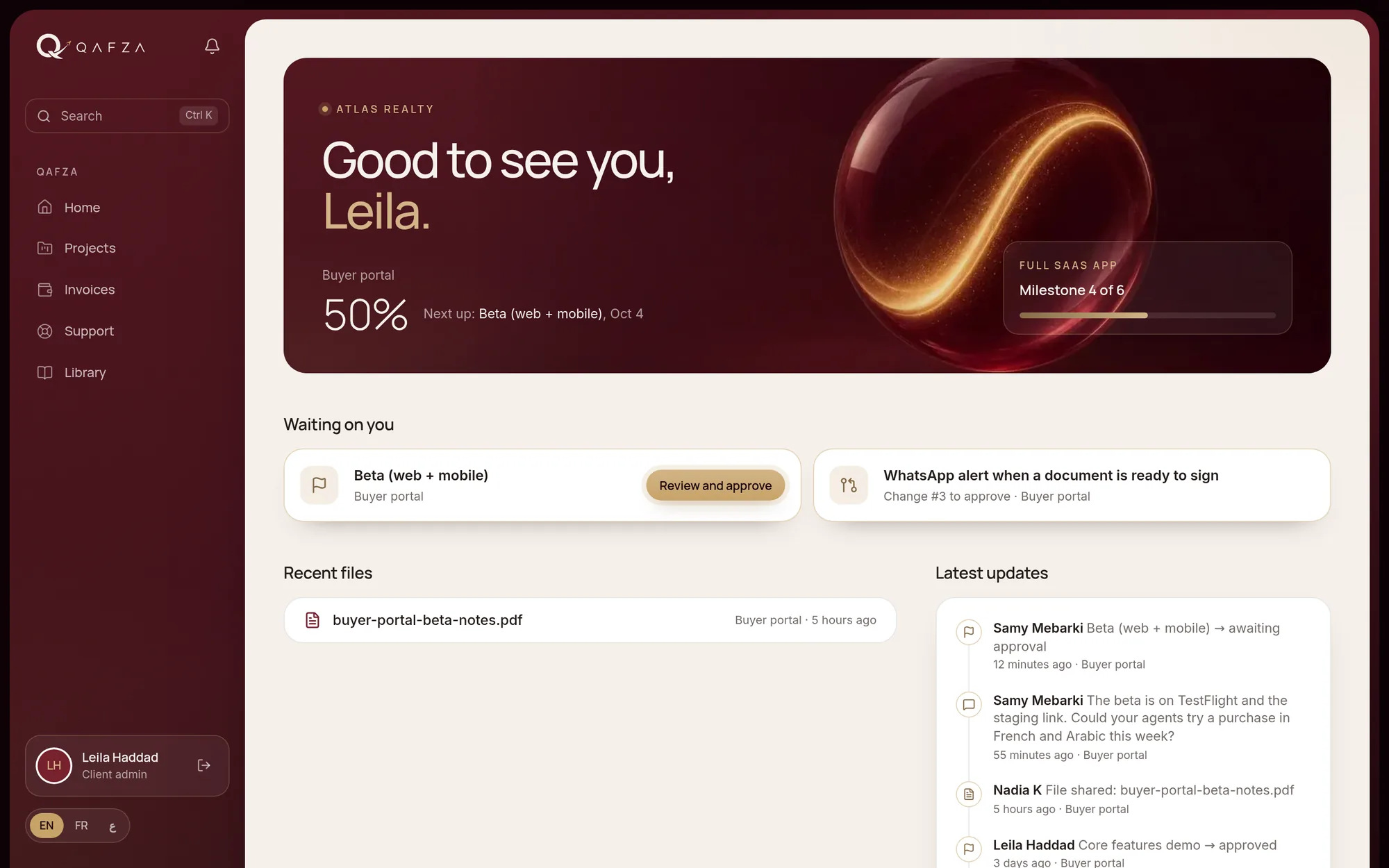
Qafza clients receive a monthly report in the first week of the month. In Qafza OS, a draft is prepared from what was actually recorded on the project: milestones reached, tasks completed, files delivered, approved changes, support requests and response times. The team adds the summary and the results measured with the client, from Search Console and ad accounts where they are connected, then sends it. We do not promise results; we report the work and measure the outcomes with you.
 Free: the client onboarding kitWelcome email, questions per service, access checklist, kickoff agenda and first-week plan.Get the kit
  Qafza teamOctober 7, 2026