
Why custom quotes slow you down
A custom quote starts with a call, then a second call to clarify, then days of estimating, then a document nobody else in the agency could have written. The prospect waits, compares, and often goes quiet. When the project is won, the team discovers what was sold by reading a proposal that looks like no other.
Custom quoting also hides a pricing problem. When every project is different, you never learn which kind of work is profitable, because nothing is comparable. Two similar websites end up priced differently because they were quoted on different days, by different people, in a different mood.
A package does the thinking once. The scope, the stages, the revisions and the payment schedule are decided in advance, and the sales conversation becomes about fit: which package matches this client, and what, if anything, needs adding.
Start from the projects you have already sold
Do not invent packages on a whiteboard. Pull your last ten or twenty projects and sort them by service line: websites, software builds, SEO, branding, maintenance. Within each line, look for what keeps coming back. Most agencies find that a handful of shapes cover most of their work: a small site, a larger site with more pages and integrations, a full rebuild, a monthly plan.
For each shape, note what was actually delivered, how long it took, how many rounds of feedback it needed and where it went over. That is the raw material for your packages, and it is based on facts, not hopes.
Three or four packages per service line
Keep each service line to three or four packages. Fewer than three gives the client no real choice; more than four makes them compare details instead of deciding. A common structure is an entry package for a clear, limited need, a main package that suits most clients, and a larger package for complex projects. A monthly plan for ongoing work can sit alongside them.
Name packages after what the client gets, not after metals or sizes. A name like "Launch" or "Care" tells the client what stage of their business the package serves; "Gold" tells them nothing.
Define each package the same way
Every package should answer the same questions, in the same order, so the team and the client can read it without a call:
- Outcome: what the client has at the end, in one sentence.
- Scope: the pages, features or deliverables, described so both sides can check them.
- Phases: the stages of the work, each ending with something the client approves.
- Revisions: how many rounds are included per phase, and what counts as a revision.
- Not included: content writing, photography, translation, paid media, third-party fees, whatever you exclude.
- What the client provides: content, access, decisions, and by when.
- Length: the usual duration in weeks, assuming the client's inputs arrive on time.
Write these in plain language. If a line needs a call to explain, rewrite it.
A good package can be read by the client, the salesperson and the developer, and all three understand the same thing.
Tie payments to milestones
A fixed package deserves a fixed payment schedule, and the simplest one follows the phases. A short project might be paid half at the start and half at launch. A longer build might be split into three parts: at the start, at an agreed midpoint milestone, and at delivery. Monthly services are usually paid in advance for the month ahead.
Linking each payment to a milestone the client approves keeps cash flow steady and makes the conversation easy: the invoice follows something the client has seen and accepted. Write the schedule into the package itself, not only into the proposal, so nobody negotiates it from scratch each time.
Set a minimum engagement
Small jobs cost more than they look. Each one needs a call, a proposal, onboarding, project setup, invoicing and follow-up, whatever its size. A minimum engagement is the smallest project your agency takes on, and it protects the team from work that cannot pay for its own administration.
Say it openly, on your website or in the first call. Prospects below the minimum are better served by being told early, with a pointer to a simpler option, than by a proposal that will not suit either side.
Handling "can you do it cheaper?"
Sooner or later a prospect will like a package and ask for a lower price. Lowering the price for the same scope teaches every future client that your prices are an opening offer. Change the scope instead.
- Offer the smaller package, and explain clearly what it leaves out.
- Remove a deliverable from the package and show what the price becomes without it.
- Split the project into phases, and start with the first one.
- Move part of the work to the client, such as writing content or sourcing photos, with dates written in.
Each of these keeps the link between price and work intact. If none of them fits, it is usually better to let the project go than to start it at a price the team will resent.
Custom work still has a place
Packages do not mean refusing unusual projects. They mean the unusual ones are the exception. For a complex software build or a platform nobody has fully defined yet, offer a paid discovery phase first: a short, fixed piece of work that produces a scope, a plan and an estimate, which then becomes a custom proposal. The discovery itself is a package.
Keep packages alive
Review your packages every few months. Look at which ones sell, which ones run over, and where clients keep asking for the same addition. When an addition is requested often, it may belong in the package, or in a new one. When a package always overruns, its scope or its duration is wrong, and the fix is to rewrite it, not to absorb the cost project after project.
How we do it at Qafza
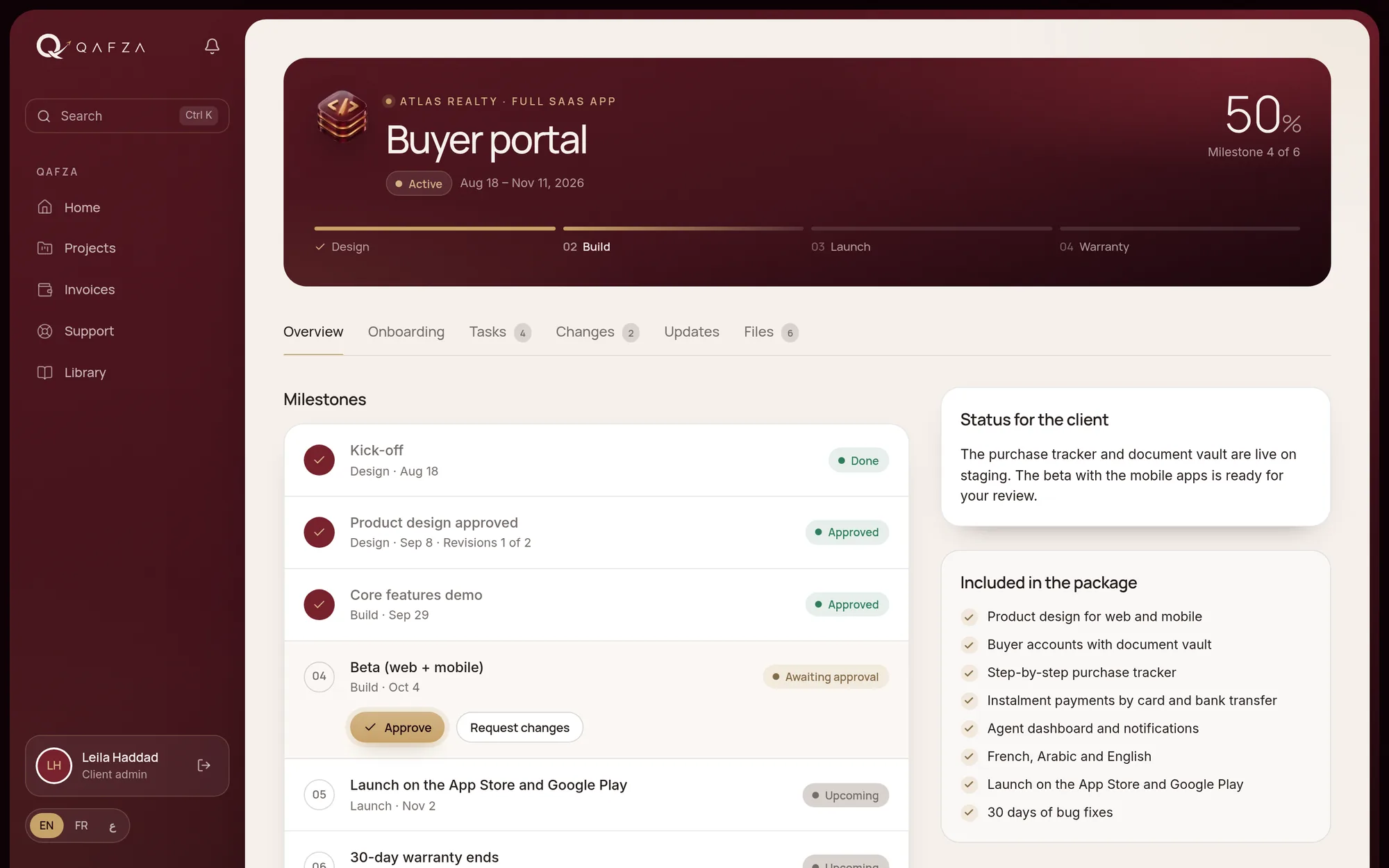
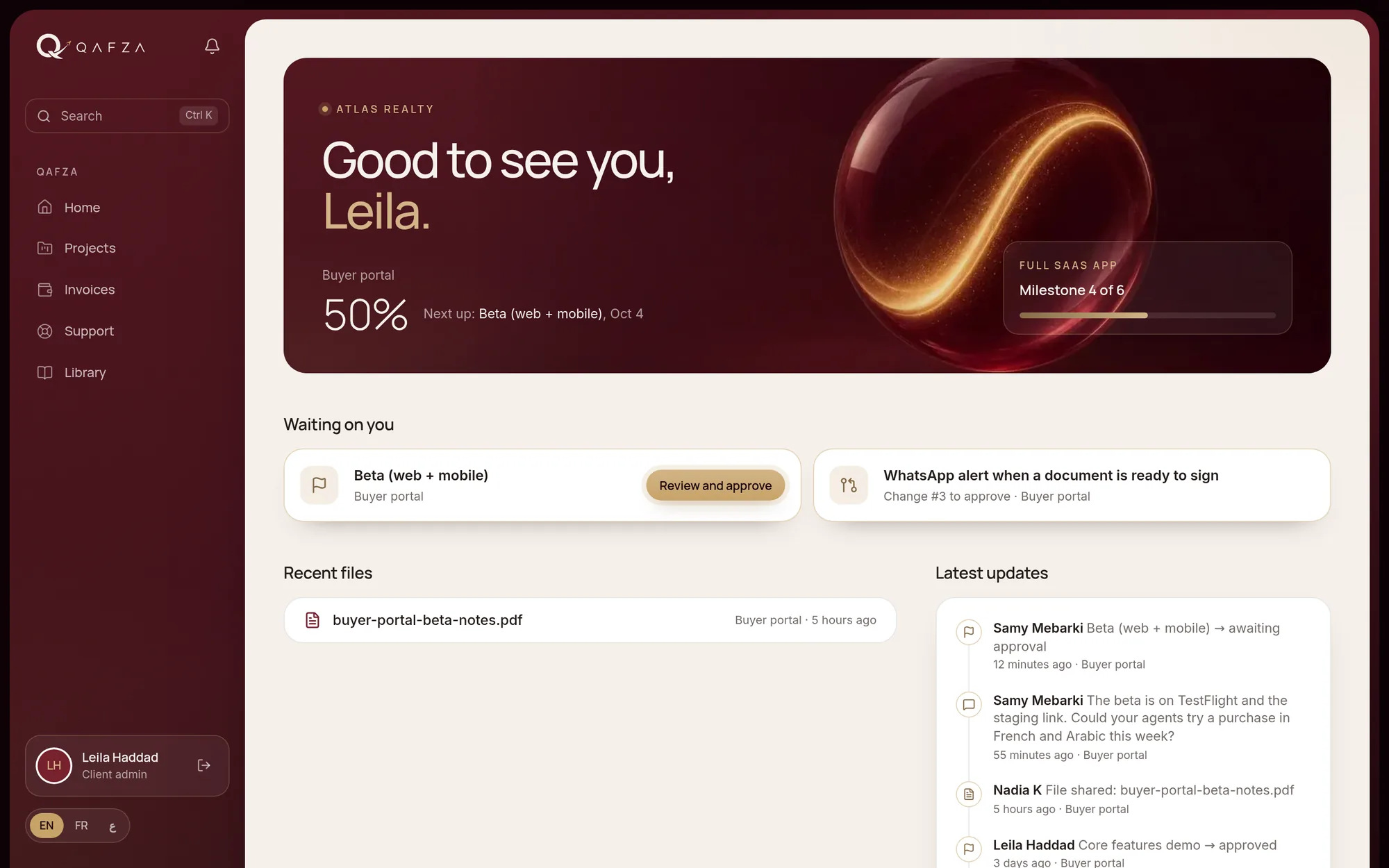
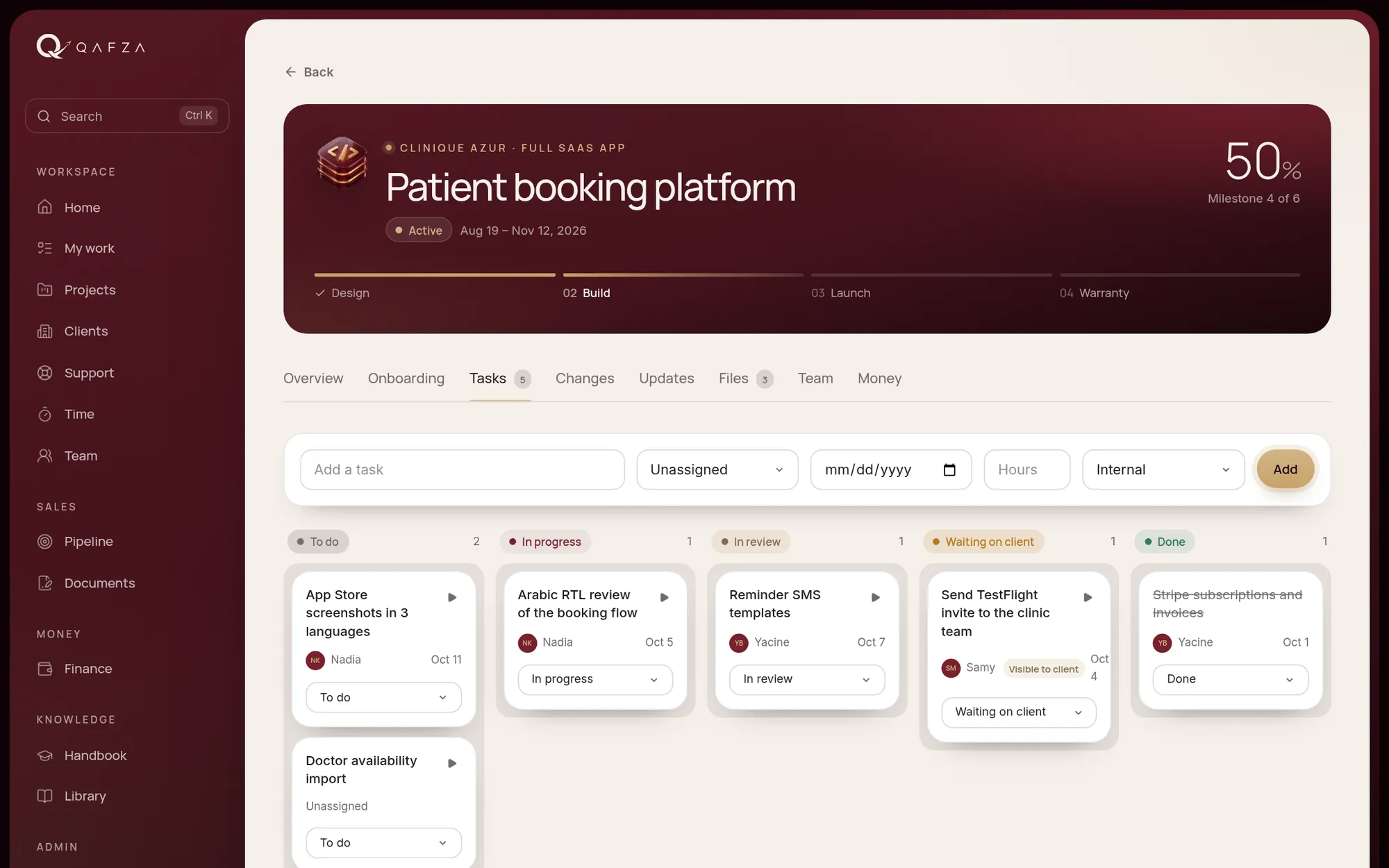
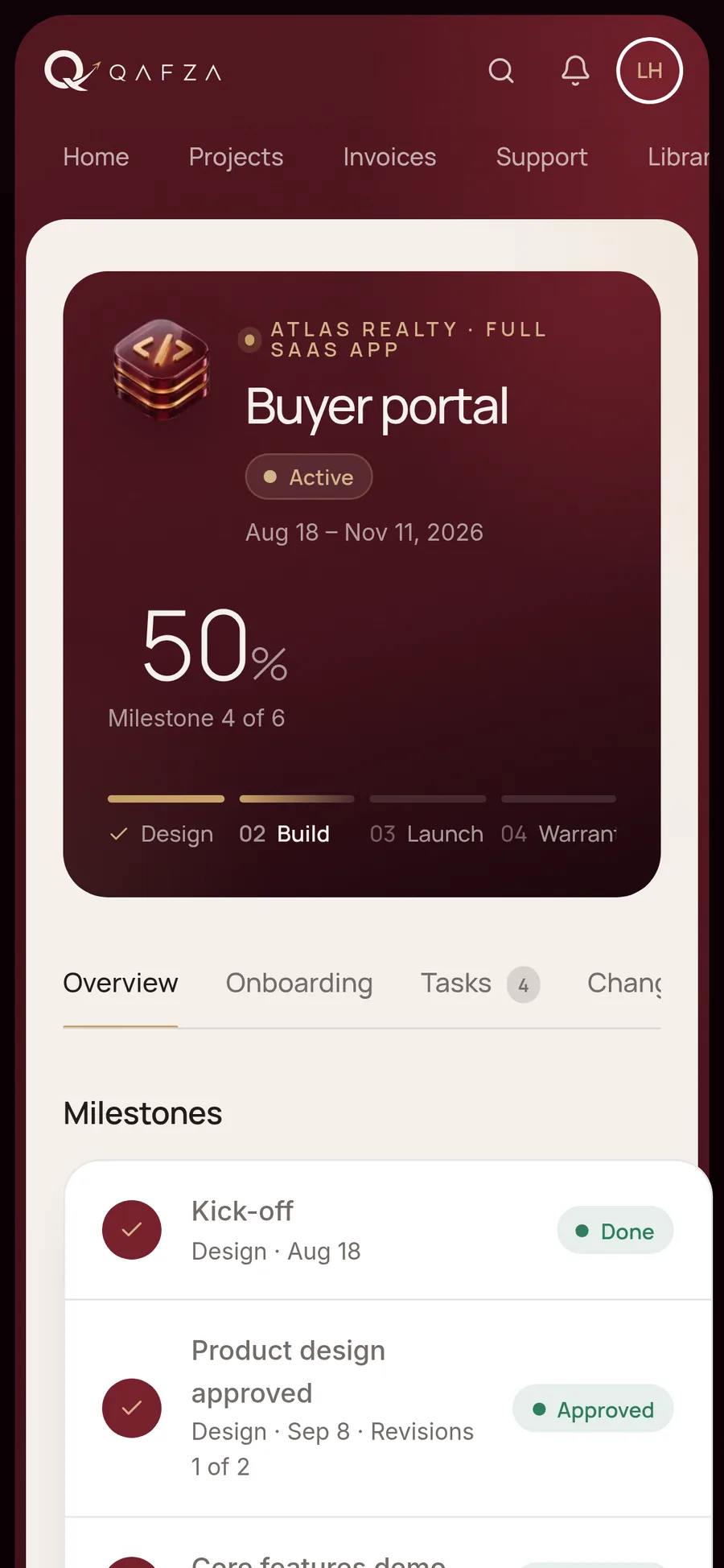
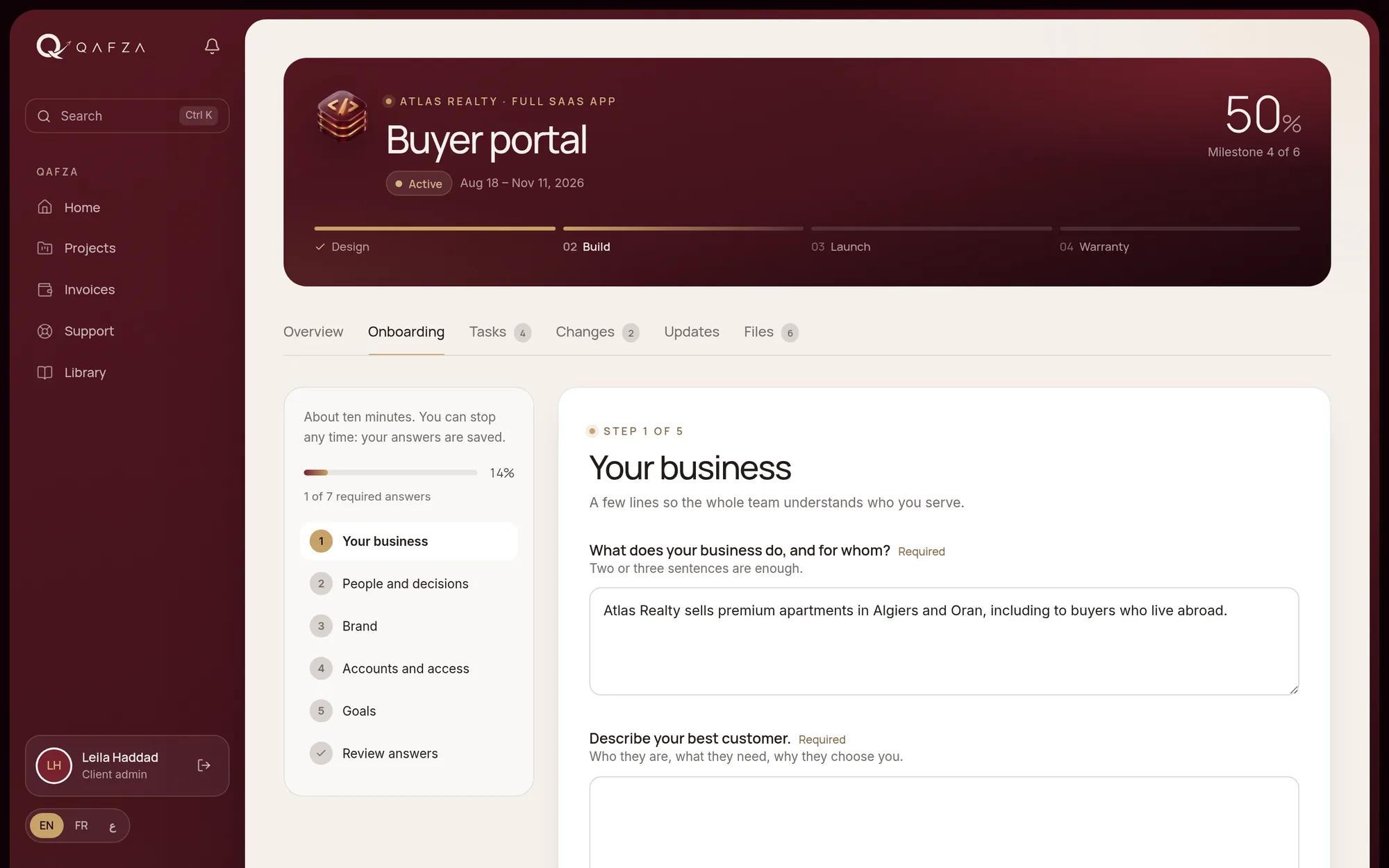
Qafza sells its websites, software builds, SEO and maintenance as fixed packages, each with a written scope, phases, two revision rounds per stage, a list of what is not included and a payment schedule tied to milestones. In Qafza OS, a package is a template: a proposal starts from it, and once signed, the project is created with its phases, milestones and invoices already in place. We commit to scope, dates, quality and response times; results are measured with the client.
 Run a premium service agency.Apply to join
 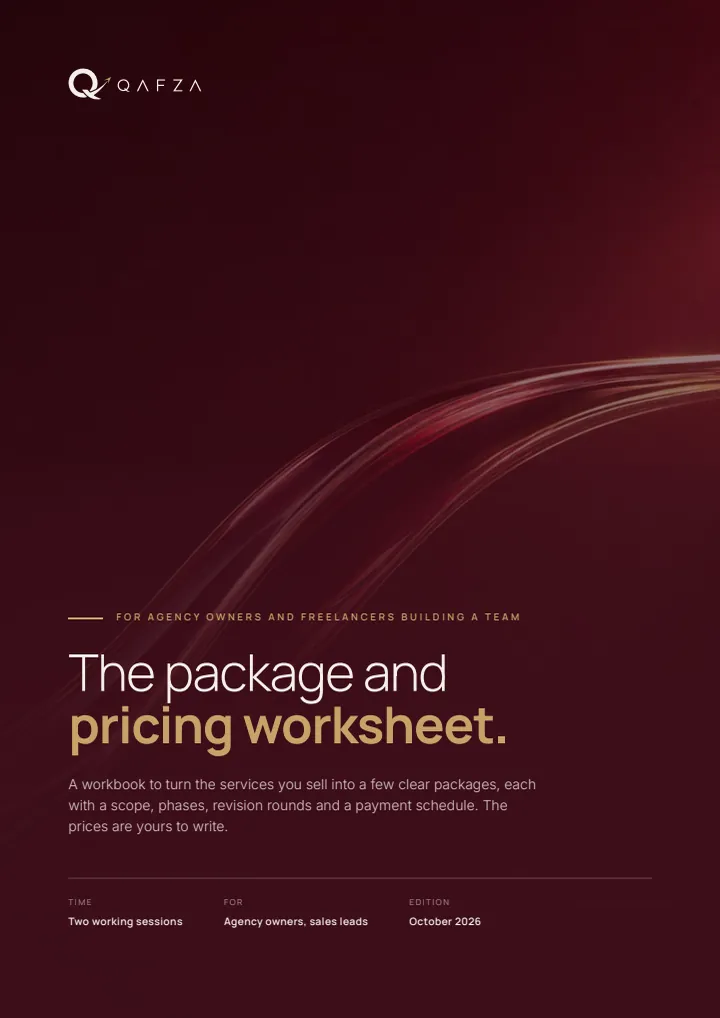 Free: the package and pricing worksheetTurn your services into clear packages with scope, phases, revisions and payment schedules.Get the worksheet
  Qafza teamOctober 7, 2026