
Start small when the idea is new
When a product is still an idea, a fixed quote for the whole thing is a guess. We prefer a short Discovery Sprint of two to three weeks that ends with a working first version, not a slide deck. Its fee is credited to the build if you continue, so the time is never wasted.
Write the scope as outcomes and screens
A useful scope describes what a user can do, screen by screen, and what is explicitly not included. "A booking system" is not a scope. "A patient can choose a treatment, a practitioner and a slot, and receives a confirmation and a reminder" is.
Split the work into stages
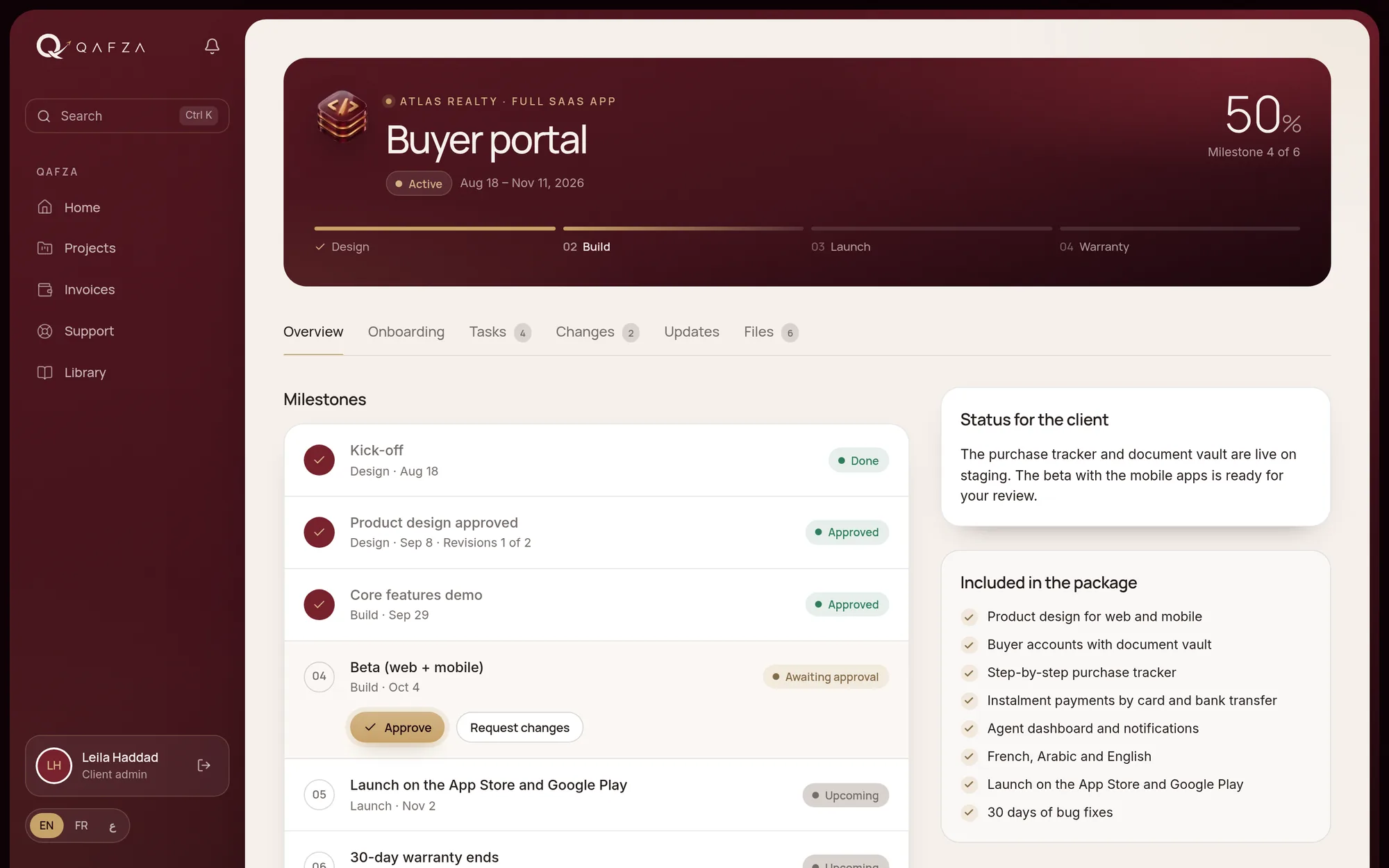
Each stage has a deliverable, a date and an approval. Payments follow the same stages, so money and progress move together. Nobody is asked to pay for work they cannot see.
Agree on revision rounds
We include two revision rounds per stage. That number is not there to limit feedback; it is there to make feedback focused. Collect the comments, send them together, and the next version answers all of them at once.
Two revision rounds per stage: enough room to get it right, and a plan that stays on schedule.
Price changes before doing them
New ideas will come up, and they should. Each one becomes a change request: described, quoted with its effect on the timeline, and approved or declined in writing before any work starts. The deadline moves only when a change is approved, and everyone can see why.
Promise what you control
We promise scope, dates, quality and response times. We do not promise business results, because they depend on more than software. What we do is measure them with you: enquiries, bookings, conversions or rankings, depending on the project.
What you get at the end of scoping
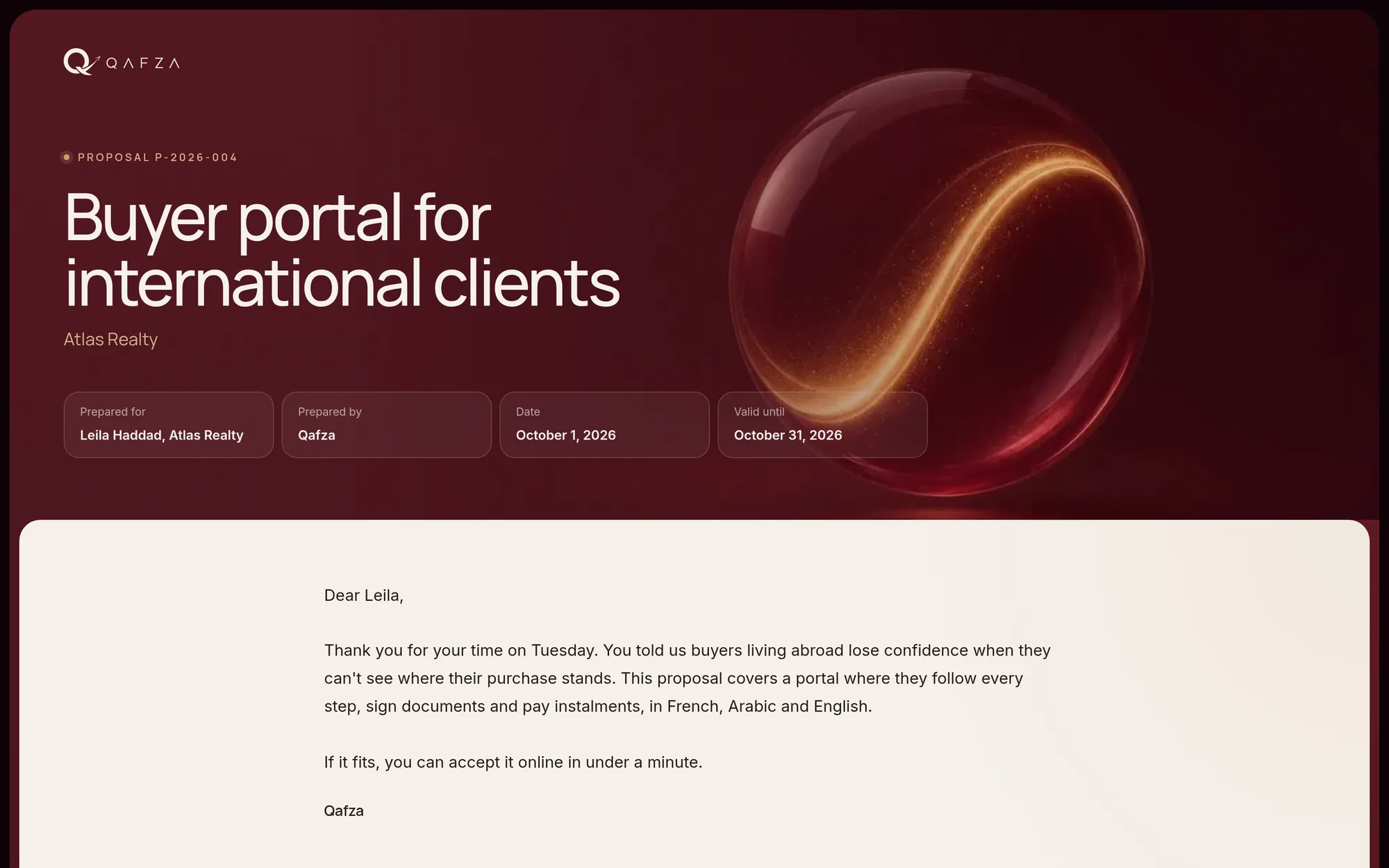
- A written proposal with scope, stages, timeline and payment schedule.
- A list of what is not included, so there are no assumptions.
- A named contact on our side and a private client space for the project.
- A first milestone date you can plan around.
 Qafza teamSeptember 18, 2026