
Why the first reply matters most
A person who writes to a clinic has usually written to several. They are comparing, often late in the evening, and they judge you on two things before anything else: how quickly you answer and whether the answer feels written for them. A generic reply hours later reads as indifference, however good the clinic is.
The goal of the first reply is not to sell a treatment. It is to show that a real person read the message, to answer what they asked as far as you responsibly can, and to propose one clear next step. Everything else can wait for the consultation.
Three things every reply needs
- A human opening: the patient's name if you have it, and the name of the coordinator writing.
- A direct answer to the question asked, or an honest reason why it needs a consultation.
- One next step with a choice: a call, a video consultation or a visit, with two or three times to pick from.
Keep it short. On WhatsApp and Instagram, long paragraphs look like a brochure and get skimmed. Two or three short lines, then the question. Always reply in the language the patient wrote in.
The first reply
This is the message most clinics should save as a quick reply and personalise each time:
Hello Sara, thank you for your message. I'm Lina, patient coordinator at the clinic. I can help you with this. Could you tell me a little about what you would like to improve, and whether you prefer a short call or a video consultation this week?
It thanks, introduces, offers help and asks one easy question. It does not paste a price list or a link to the whole website.
When they ask about price
Price is the most common first question, and ignoring it feels evasive. If your clinic publishes a starting price, give it with what it includes. If the price truly depends on an assessment, say so plainly and explain why, then make the assessment easy to book:
Thank you for asking, Karim. The cost depends on the treatment plan the doctor recommends after seeing you, so I don't want to give you a figure that may be wrong. The consultation takes about 30 minutes and you leave with a written plan and price. Would Tuesday or Thursday suit you?
Whatever you say, be consistent: every coordinator should answer the same question the same way.
When they send photos or medical questions
Patients often send photos or describe symptoms and ask what you would recommend. Coordinators should not give medical opinions by message. Thank them, explain who will review it and how, and ask before sharing anything with the medical team:
Thank you for the photos, Amira. I'm not able to give a medical opinion by message, but with your agreement I can share them with Dr. Haddad, who will tell you during a consultation which options make sense for you. Shall I do that and suggest a time?
Agree internally on where photos are stored, who can see them and when they are deleted. A coordinator's personal phone is not the right place.
Following up when they go quiet
Many people ask, read the answer and say nothing. One or two polite follow-ups are part of good service; a daily stream of messages is not. A simple rhythm works: one follow-up after a day or two, a last one about a week later, then stop.
- Follow-up: "Hello Sara, I wanted to check whether you had any other questions after my last message. I'm happy to hold a consultation slot for you this week if that helps."
- Last message: "I won't write again so as not to disturb you. Whenever you are ready, just reply here and I'll take it from there."
Out of hours and on Instagram
Messages arrive at night and at weekends. An automatic reply is fine as long as it is honest about when a person will answer, and does not pretend to be one:
Thank you for your message. Our team is offline right now and will reply in the morning, from 9:00. If you tell us which treatment you are interested in, we can prepare your answer.
On Instagram, never discuss treatment or prices in the public comments. Reply briefly and kindly under the post, then invite the person to continue in private messages. Comments are public, and some patients will not want others to know they asked.
Keep the conversations in one place
Templates only help if the team uses them and nobody's message falls through the cracks. A few habits make the difference:
- Save the replies as quick replies in WhatsApp Business and Instagram, and review them every few months.
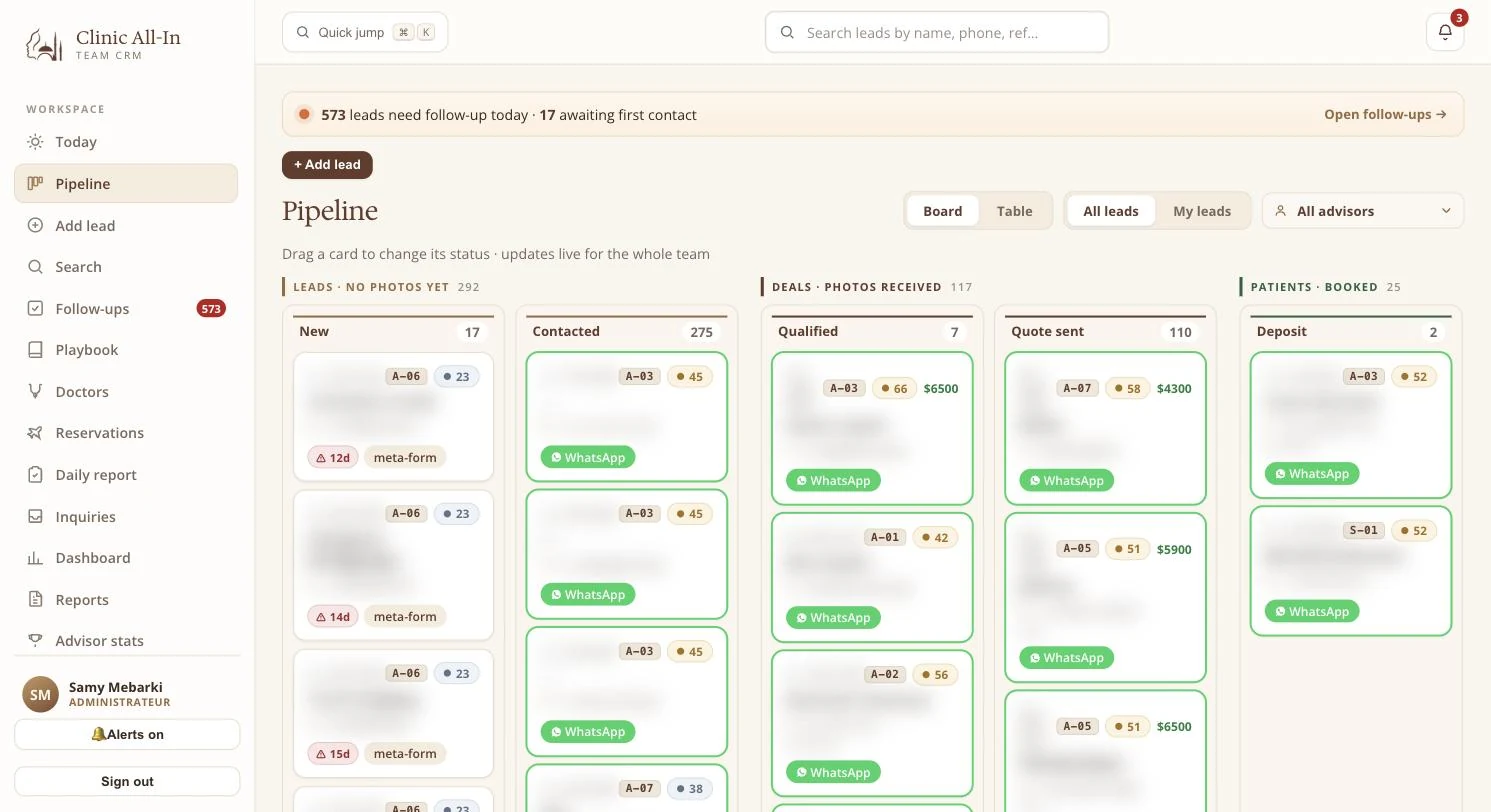
- Log every enquiry in one list or CRM with its source, the treatment of interest and the coordinator responsible.
- Set a target time for the first reply and measure the real time, during opening hours and outside them.
- Keep medical records in your clinical system, not in chat exports or spreadsheets.
Get the full set of templates
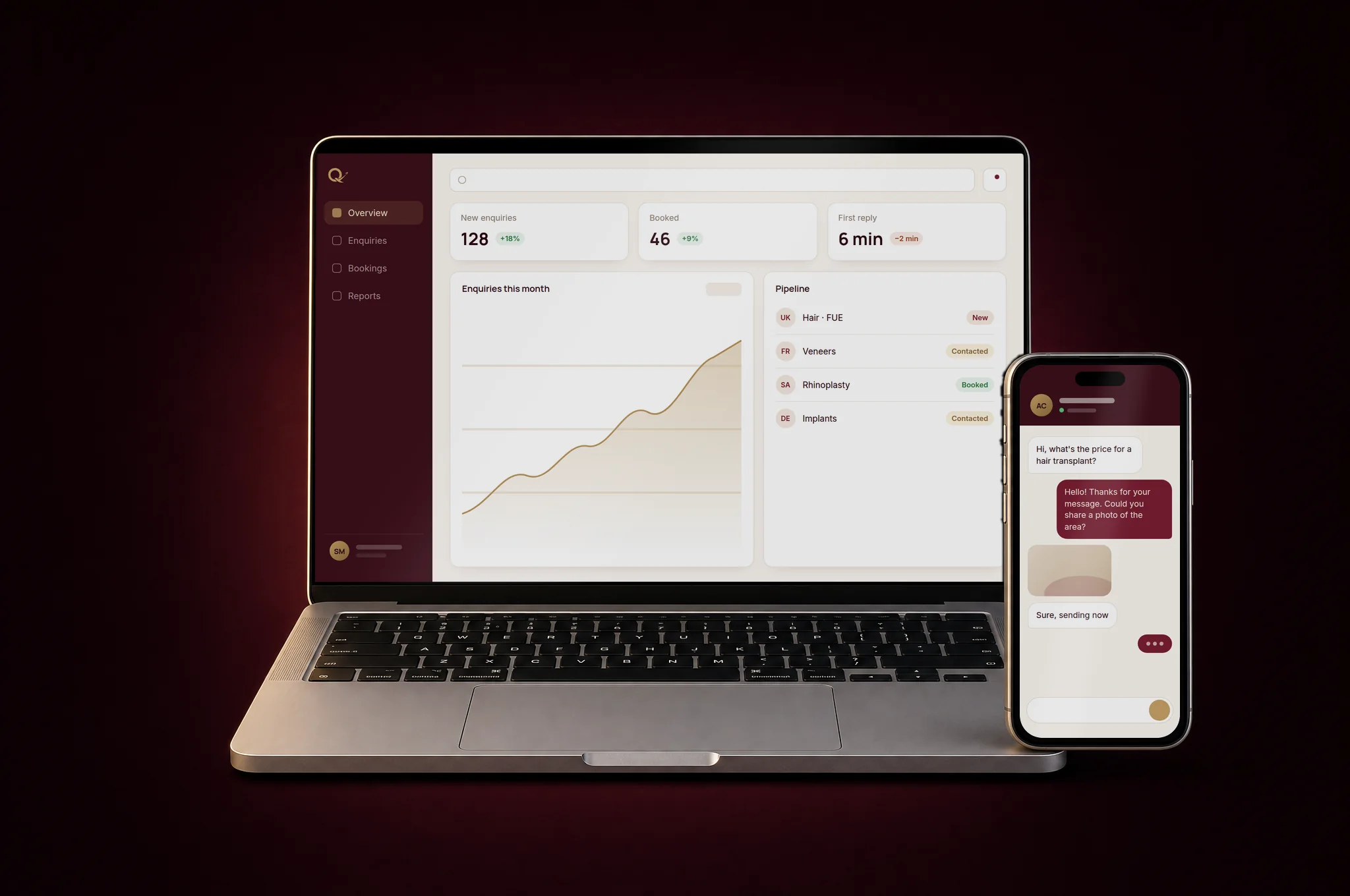
We have put together a free set of reply templates for clinics, covering first replies, price questions, photos, follow-ups, out-of-hours messages, reminders and reviews, ready to adapt to your clinic and your languages. Download it below. If you want enquiries from every channel to land in one place with reply times you can see, we build that too: we agree the scope and the dates with you, then measure enquiries, consultations and bookings together once it is live.
 Free: patient reply templatesReady-to-copy replies for price questions, bookings, follow-ups and reviews.Get the templates
  Qafza teamOctober 3, 2026