
The problem with a stack of tools
A typical agency uses one tool for proposals, another for e-signatures, a project tool, a chat app, an invoicing app, a help desk and a few spreadsheets to connect them. Each is fine on its own. Together they leave gaps: a signed proposal that never becomes a project, a change agreed in a chat that never reaches the invoice, a client who has to ask where things stand.
Copying data between tools is work nobody is paid for, and every copy is a chance for an error. We wanted one place where a lead becomes a client, a project, an invoice and a support plan without being typed twice.
From first call to signed agreement
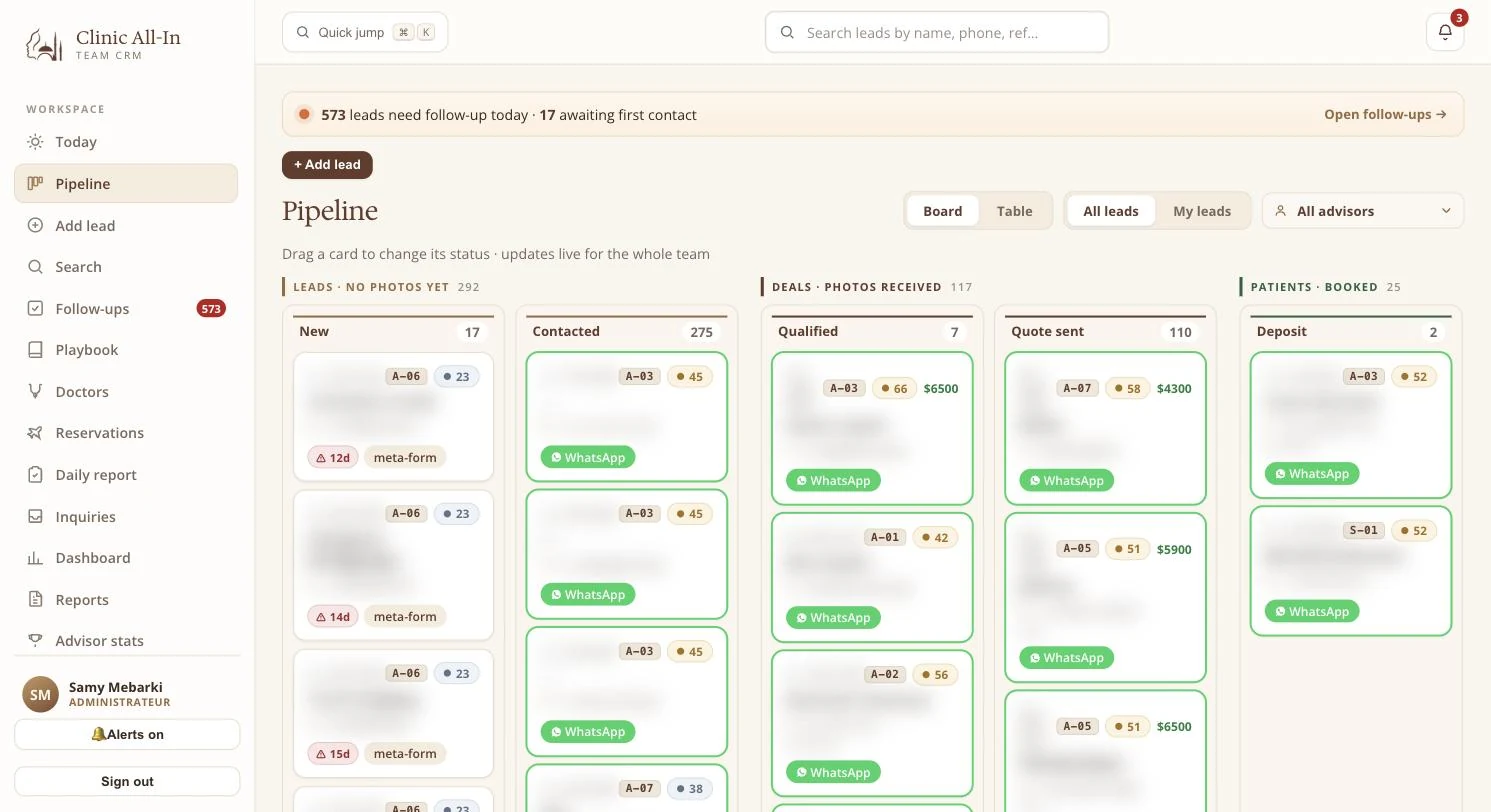
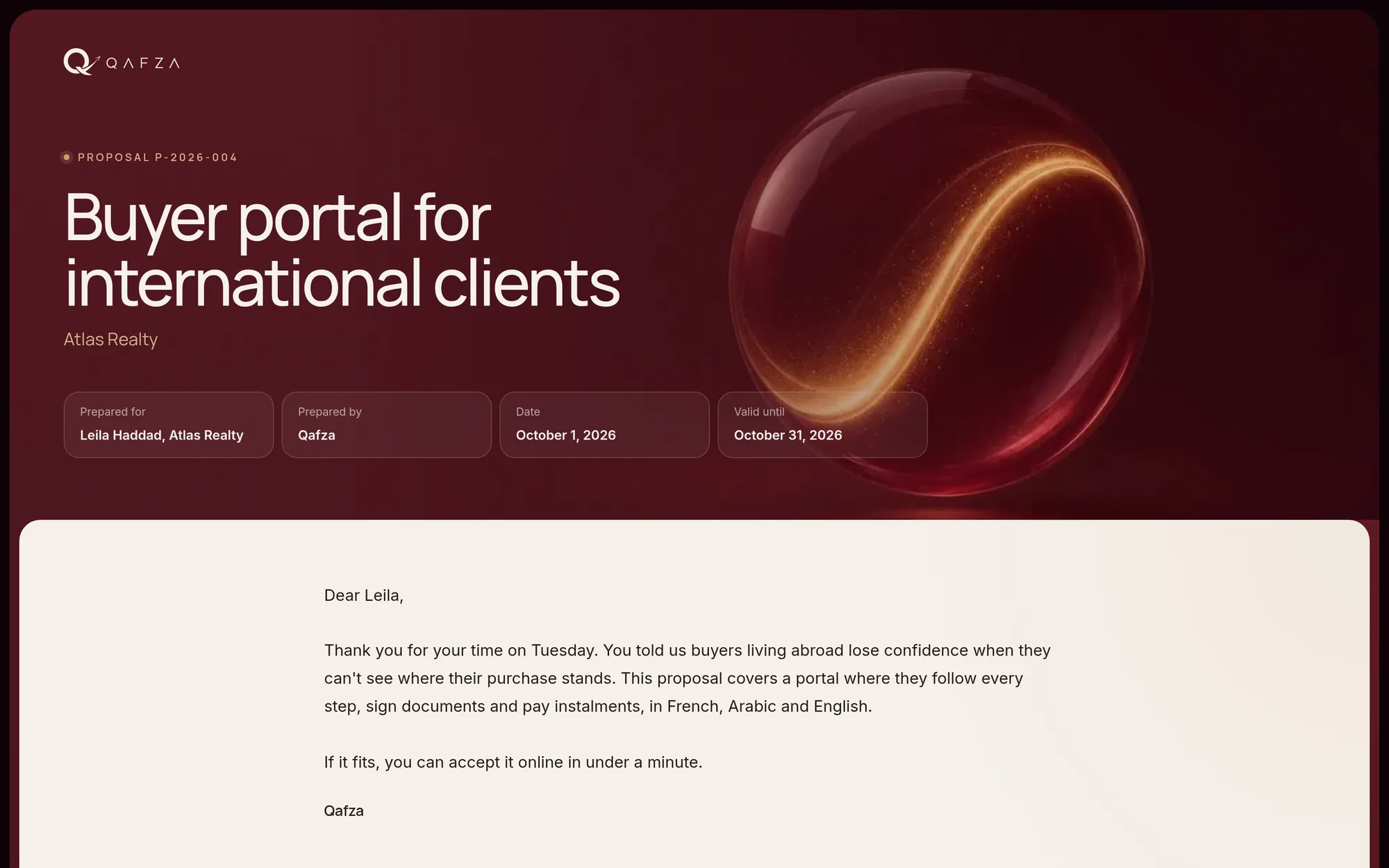
In Qafza OS, a prospect books a discovery call on the booking page and appears on the sales board. The proposal is built from the package, with scope, timeline and payment schedule, and sent as a link. The client reads and signs it online. Service agreements and NDAs are filled in on the agency's own validated PDF templates and signed the same way, so the documents look like yours, not like a generic e-signature tool.
Delivery the client can follow
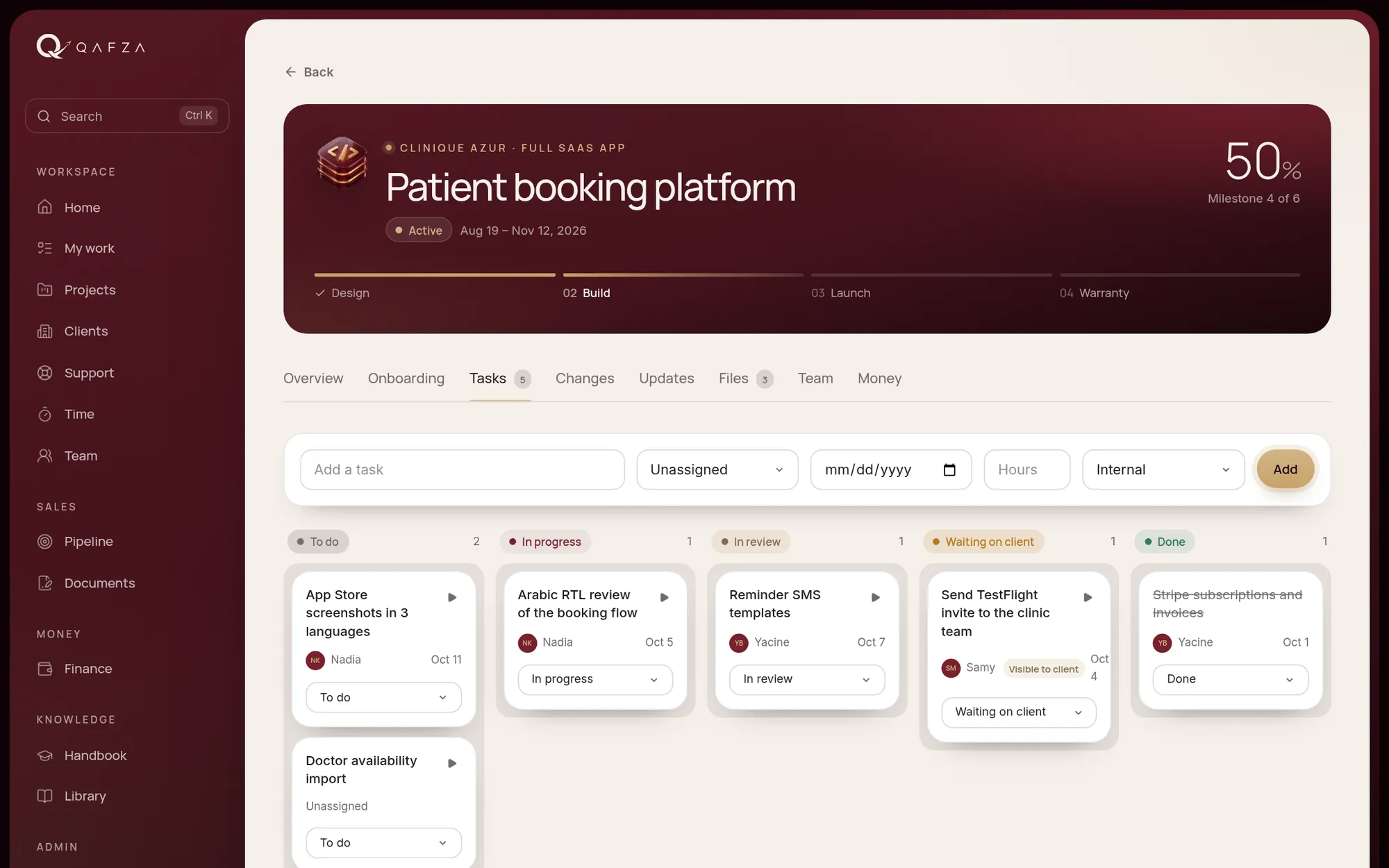
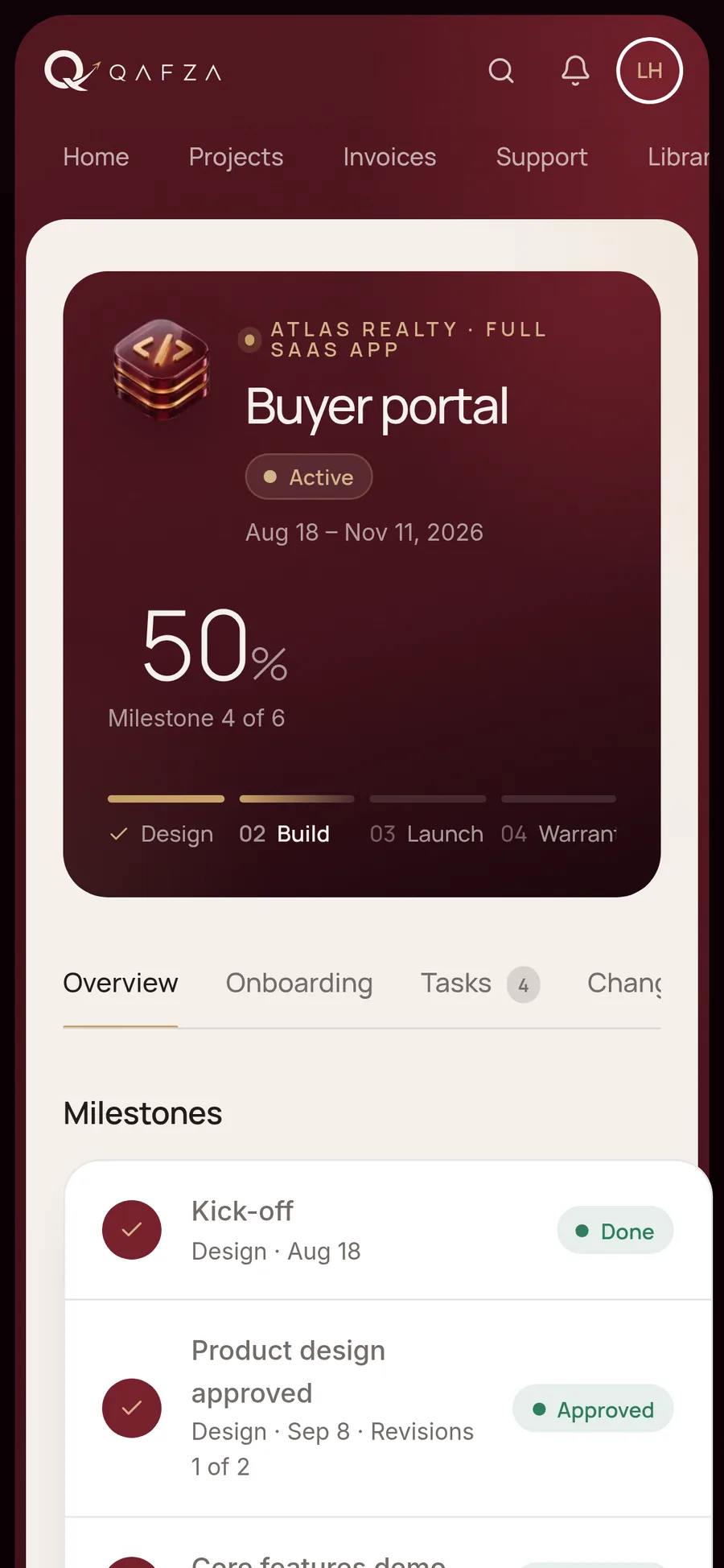
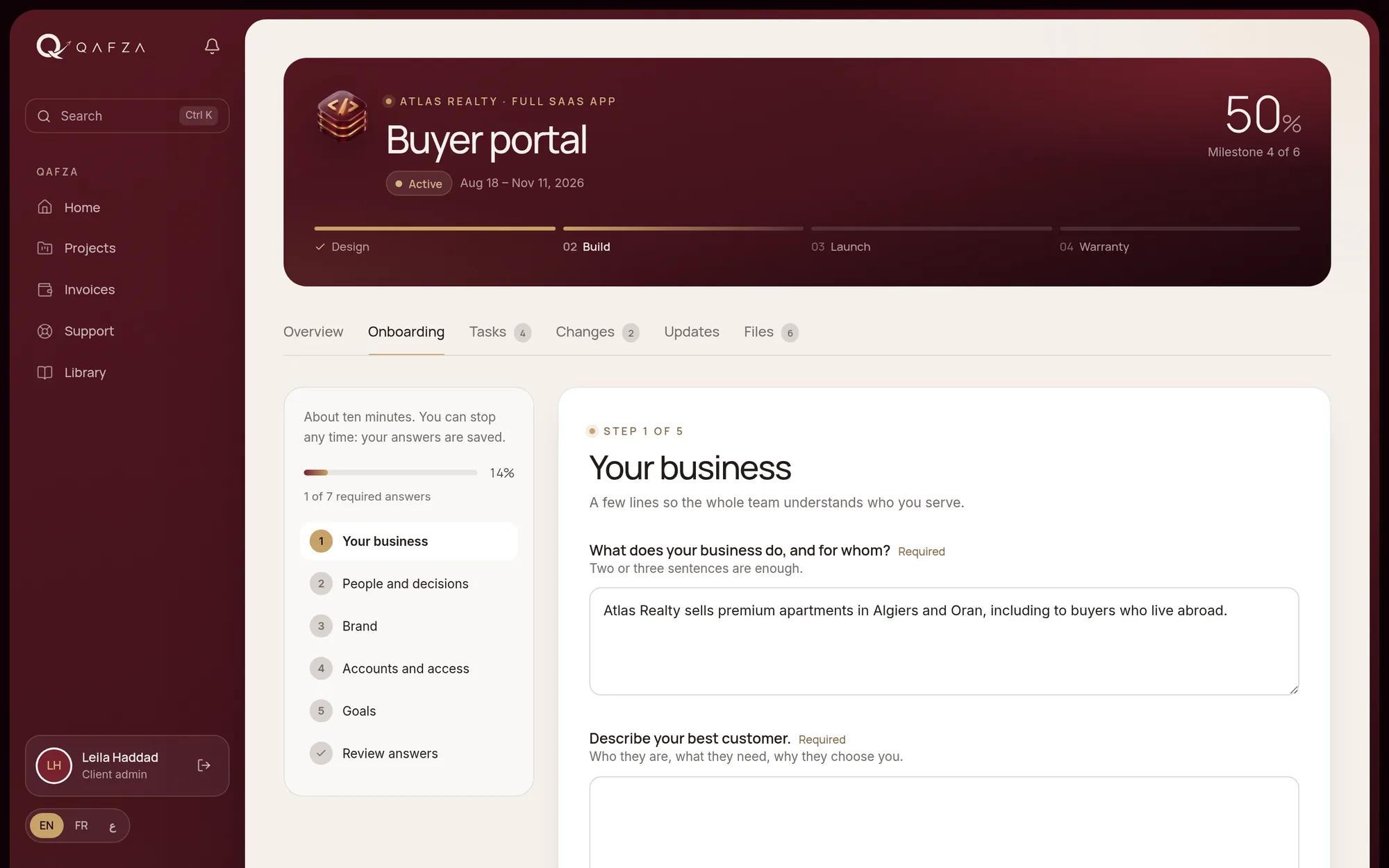
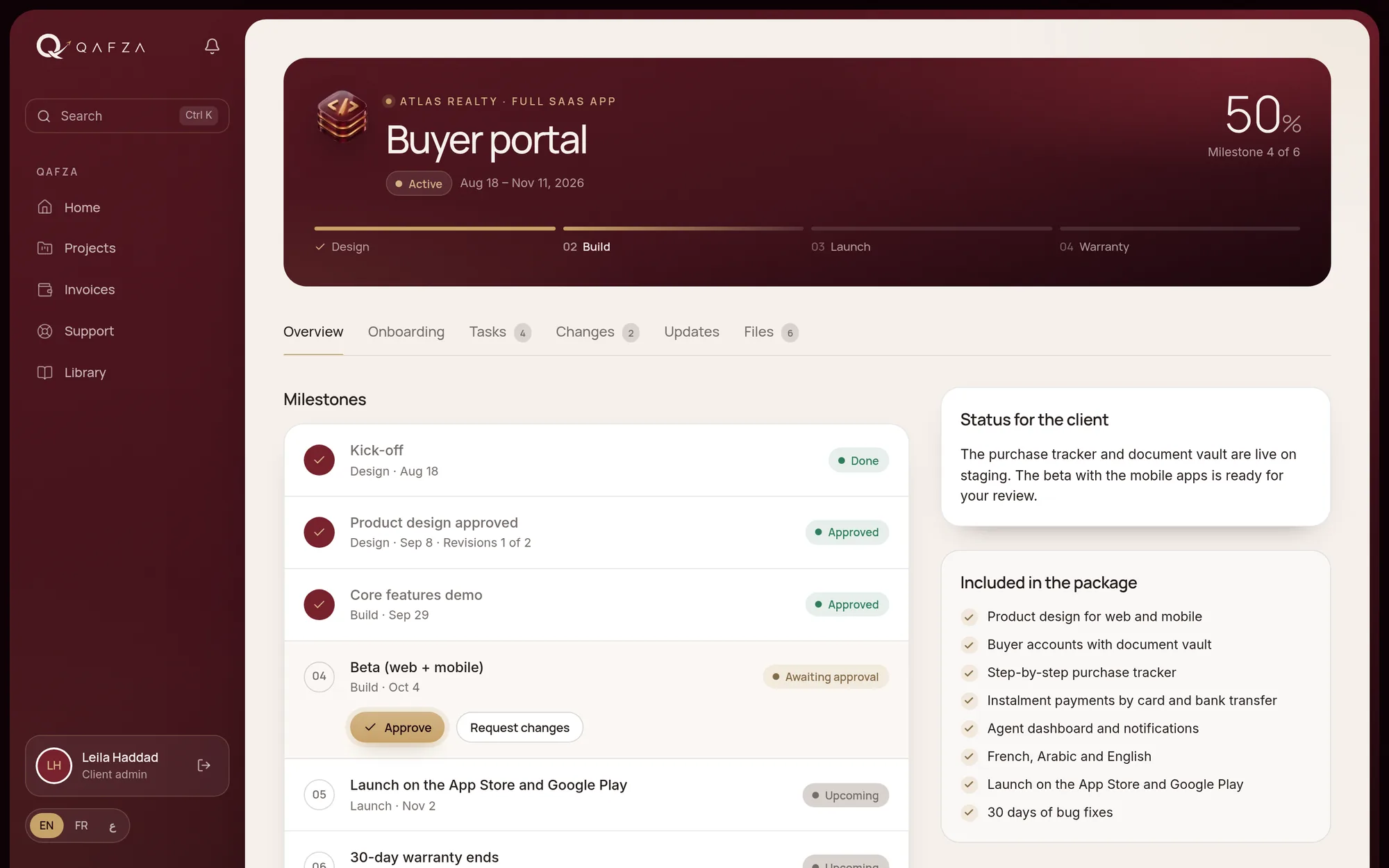
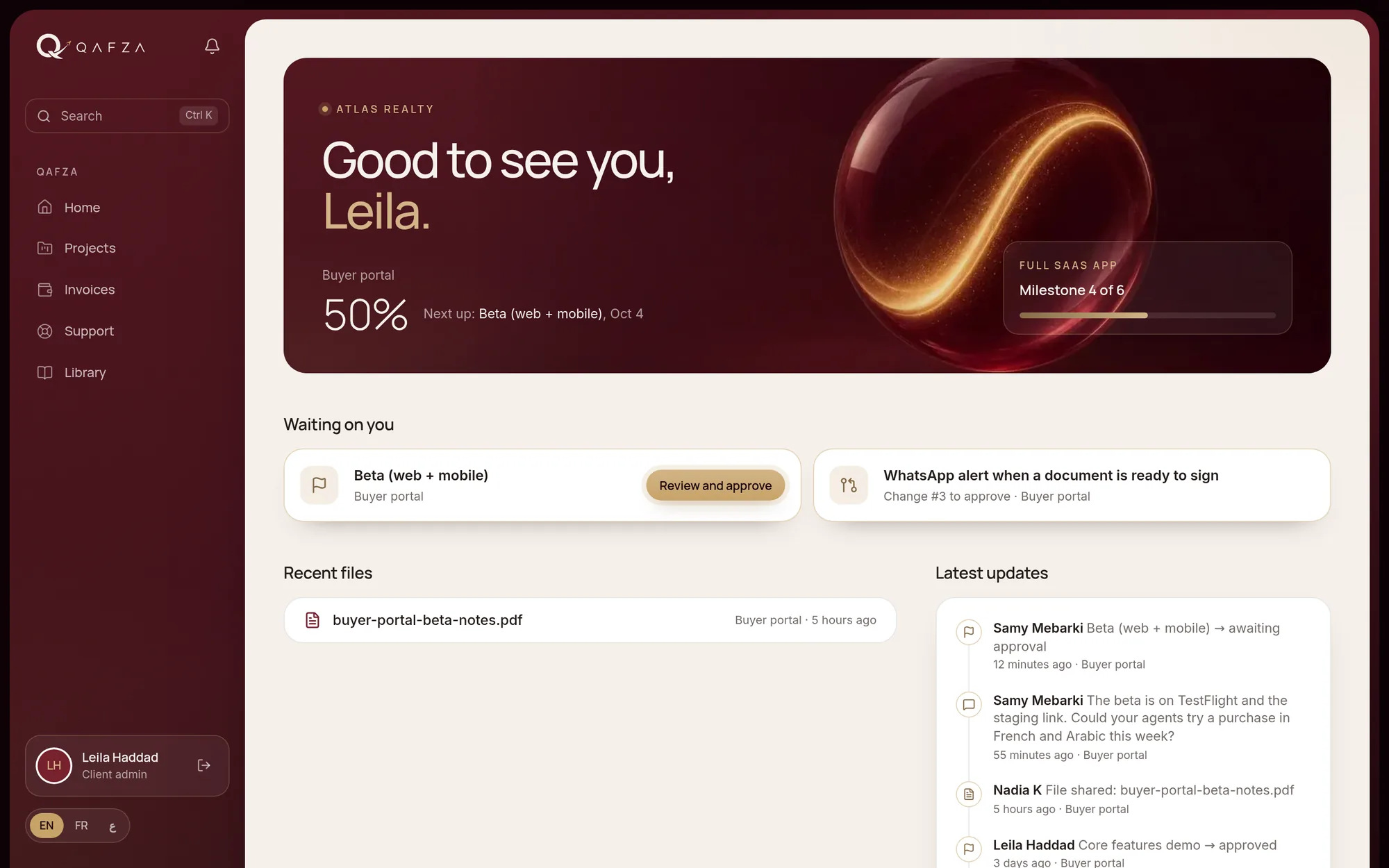
Once a proposal is signed, the project starts with an onboarding form for that service. The client then follows the work in a private portal: milestones with dates, deliverables to approve with the number of revision rounds left, files and updates. Internal notes stay internal by default.
New ideas become change requests. Each one is described and priced, with its effect on the deadline, before any work starts. When the client approves, it becomes a task, the date moves and the line goes onto the invoice. Every Friday the system drafts a weekly update for each active project from the week's activity, and the team reviews it before it is sent.
Every change is priced and approved before work starts, so the invoice never surprises anyone.
Money, support and reports in the same place
The rest of the agency runs in the same system:
- Invoices from milestones, with payment reminders and recurring billing for monthly plans.
- Support tickets with reply times set by the client's plan, and hours tracked against it.
- Time tracking and profit per project, visible only to people with access to finances.
- Monthly client reports with milestones reached, work done and the results measured together.
- A team handbook with onboarding by role, checklists and short self-checks.
Access is enforced in the database, not only in the interface. Delivery staff do not see prices or fees, contractors see only their own tasks, and clients see only what is marked for them.
What it changes for our clients
For a Qafza client, the result is simple: one link for the whole project. They sign there, answer onboarding questions there, approve deliverables, request changes, pay invoices and open support tickets there. They do not need to ask where things stand, and neither do we.
It changes how the team works too. Because every decision, approval and change is recorded where both sides can see it, conversations stay on the work itself rather than on who said what and when. When a project ends, its full history stays with it, ready for the support plan that follows.
Available under your own name
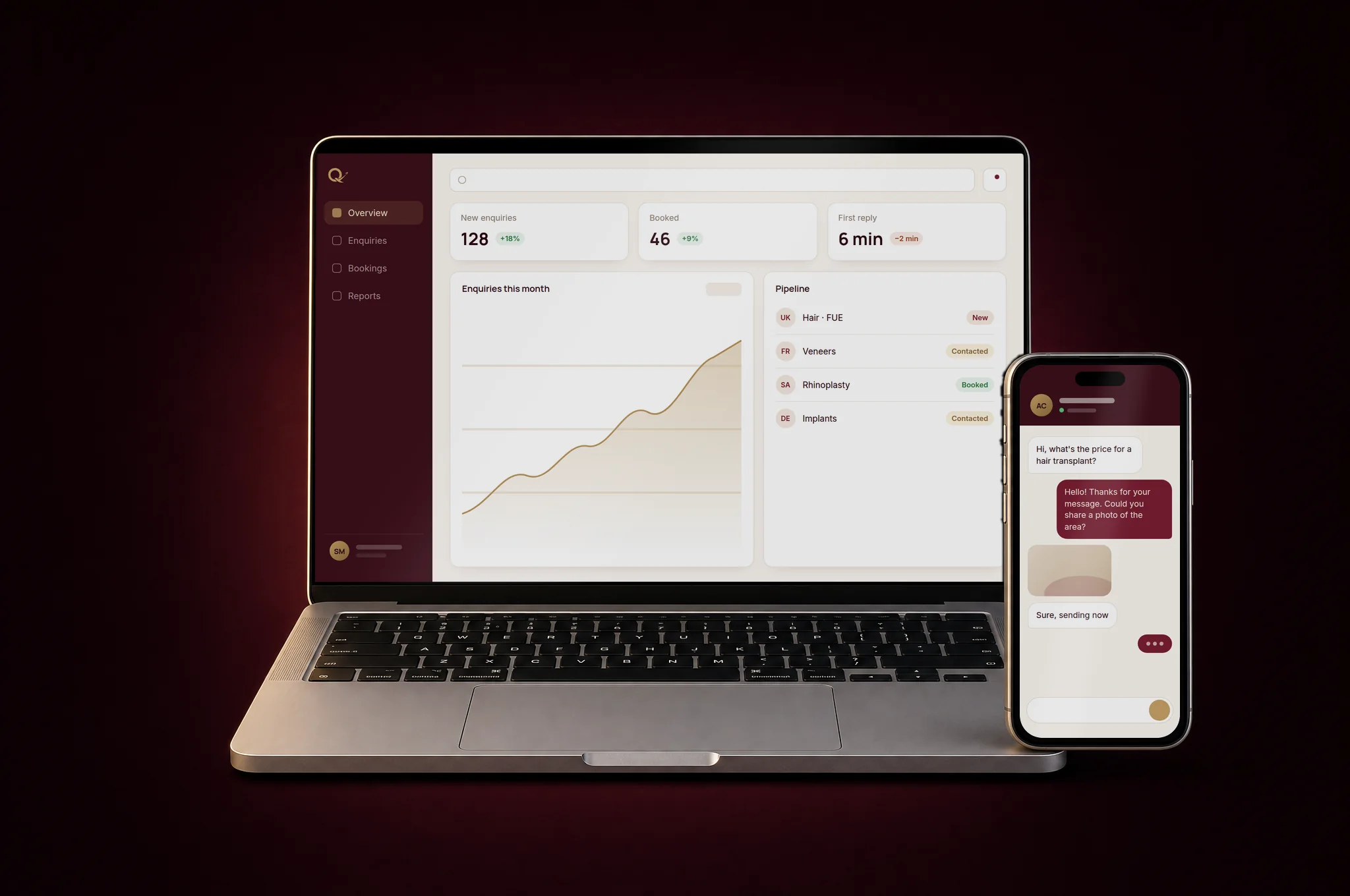
We built Qafza OS as a white-label product from day one. Agencies and clinic groups can run it under their own name, colours and domain, with their own packages, roles and document templates. Their clients never see our brand. A demo workspace with sample clients, projects and invoices shows how it works, and the product page at qafza.dev/en/os has the details.
How we work at Qafza
Every project we deliver, from a Launch website to a full SaaS build, runs on Qafza OS. If you run an agency or a clinic group and want to see it with your own branding, request a demo from the product page. We will walk through the demo workspace on a call, agree what needs setting up, and send a fixed quote with dates.
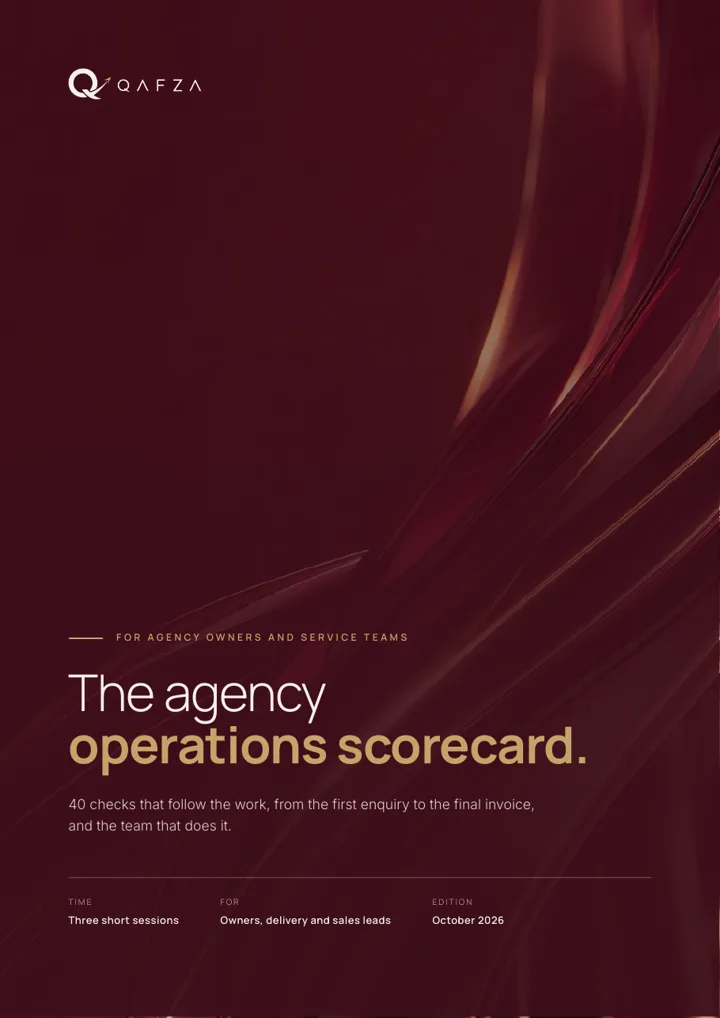 Free: the agency operations scorecard40 checks from the first enquiry to the final invoice, with a scoring page.Get the scorecard
  Qafza teamOctober 3, 2026