Start with what you need, written down
Before you contact anyone, write one page about your project: who your customers are, what the website or application must help them do, which languages it needs, and what you already have (logo, texts, photos, an old site, a Google profile). Add the date you need it by and who on your side will make decisions.
This page does two things. It lets you compare agencies on the same basis, because each one answers the same brief. And it shows you quickly who listens: a good agency will ask questions about your page before it talks about itself.
Questions to ask every agency
On the first call, ask the same questions to everyone and note the answers. The way an agency answers matters as much as the answers themselves.
- Who will actually work on my project, and who is my contact day to day?
- How do you split the project into stages, and what do I approve at each one?
- How many rounds of revisions are included per stage?
- How do you handle a change I ask for in the middle of the project?
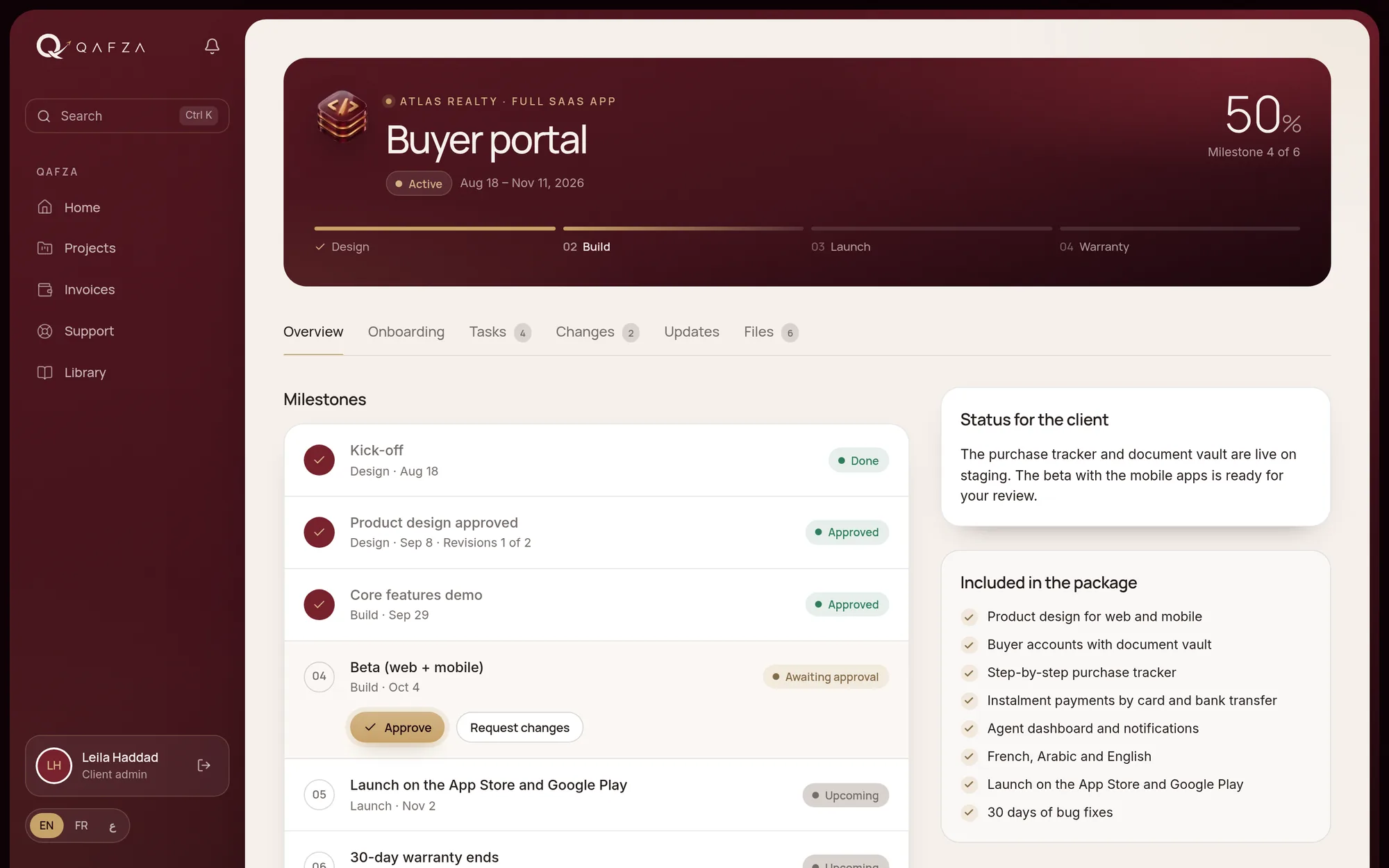
- Where will I follow progress: email, chat, or a dedicated client space?
- Whose name will the domain, hosting and accounts be in?
- What happens after launch, and how quickly do you reply to a support request?
Ask also to see work similar to yours, and to talk about how those projects ran, not only how they look.
What a good proposal contains
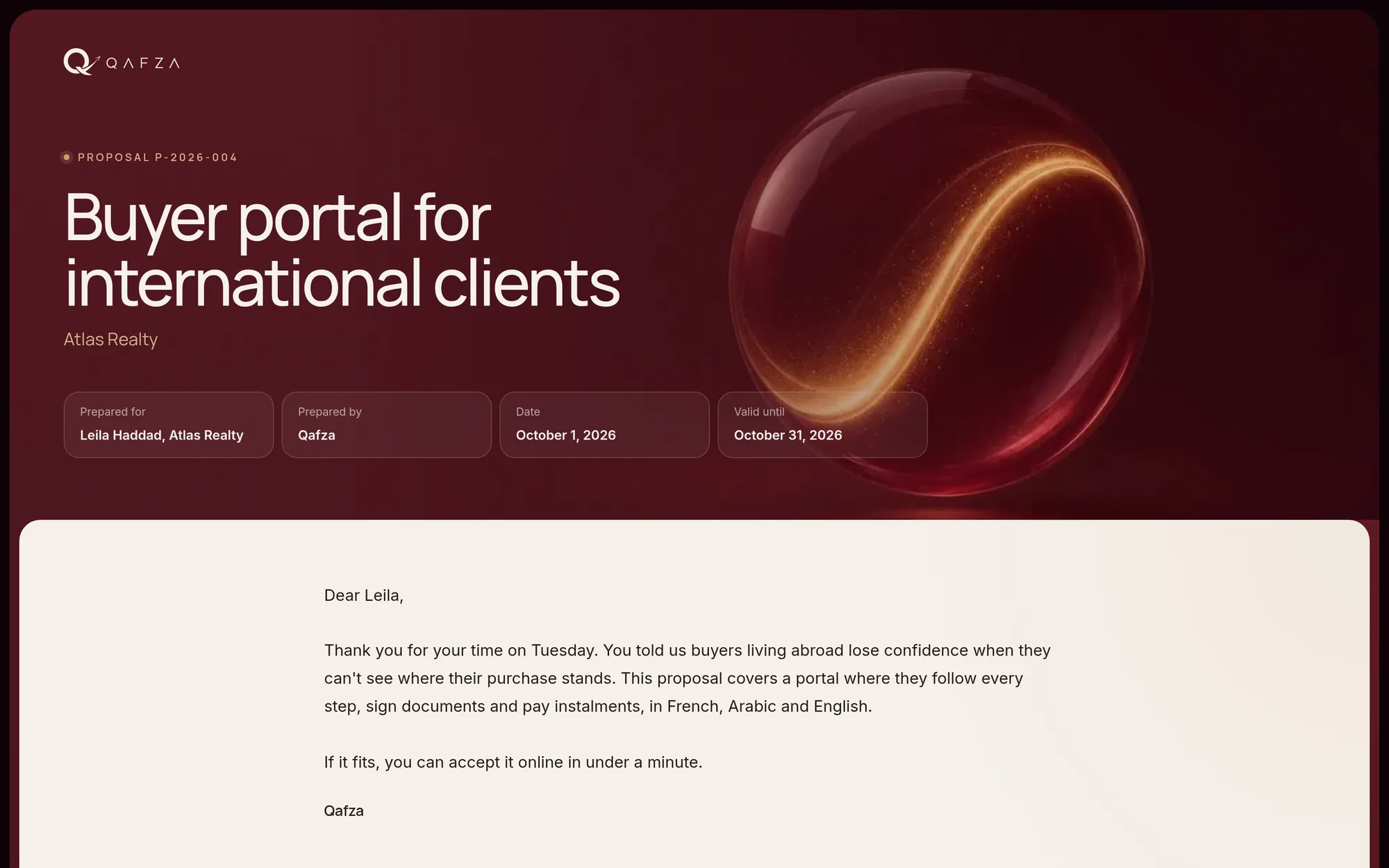
A proposal is the document you will come back to every time there is a doubt. A vague one protects nobody. A serious proposal includes at least:
- A written scope: the pages, features and deliverables, described precisely enough that both sides read them the same way.
- Stages with dates: for example brand, design, development and launch, each with a delivery date and an approval.
- Revision rounds: how many per stage, and what counts as a revision rather than a new request.
- What is excluded: copywriting, photography, translation, paid advertising, content entry, third-party fees. Exclusions written down avoid arguments later.
- A fixed quote and a payment schedule tied to the stages.
- What you must provide, and by when, so the dates can hold.
If it is not written in the proposal, assume it is not included, and ask.
Who owns the domain, hosting and accounts
This is the point most businesses forget, and the one that hurts most years later. The domain name, the hosting, the Google Business Profile, the analytics and the social accounts should be registered in your company's name, with access you control. The agency can manage them for you, but as a user you added, not as the owner.
Ask the agency to put this in writing, and to state when the source code and design files become yours. If an agency refuses, or is vague, treat it as a warning: you are buying a website, not renting access to one.
Invoicing in dinars, by transfer or cash with a receipt
If your company pays in dinars, ask to be invoiced in DZD, with invoices that carry the agency's legal details and match each stage of the payment schedule. Payment by bank transfer leaves a clear record. If you pay in cash, insist on a numbered receipt for every payment, with the date, the amount and the stage it covers.
These documents are not paperwork for its own sake. They let your accountant book the expense properly, and they prove what has been paid if there is ever a disagreement about the project.
Support after launch
A website is not finished on launch day. Certificates expire, plugins and libraries need updates, forms stop sending, and you will want to change a page. Ask what happens next: is there a support plan, what does it cover (hosting, backups, security updates, small changes), and what is the response time when you report a problem?
Ask also how you report a problem. A support request sent to one person's WhatsApp gets lost when that person is on leave. A ticket in a shared system, with a promised response time, does not.
Red flags
Some signs should make you slow down before you sign:
- No written proposal, or a quote with a single line and a single price.
- Promises of first place on Google or a guaranteed number of customers. Nobody controls rankings.
- The domain or hosting registered in the agency's name, or in an employee's.
- No stages and no dates, only "it will be ready soon".
- Unlimited revisions. It sounds generous, but it usually means no plan.
- Full payment requested upfront for a large project, with nothing delivered before the end.
- No answer to the question "what happens after launch?".
How we work at Qafza
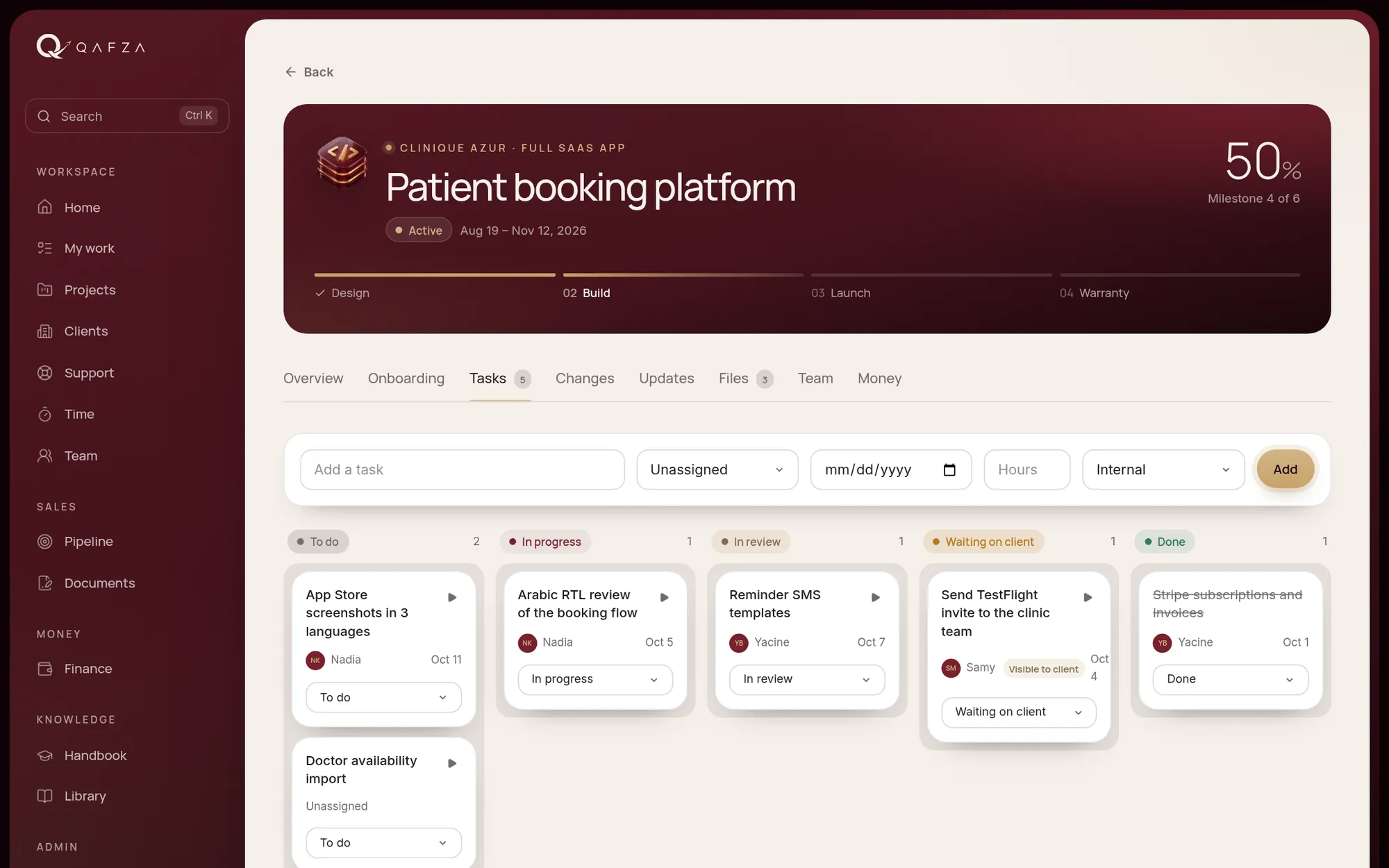
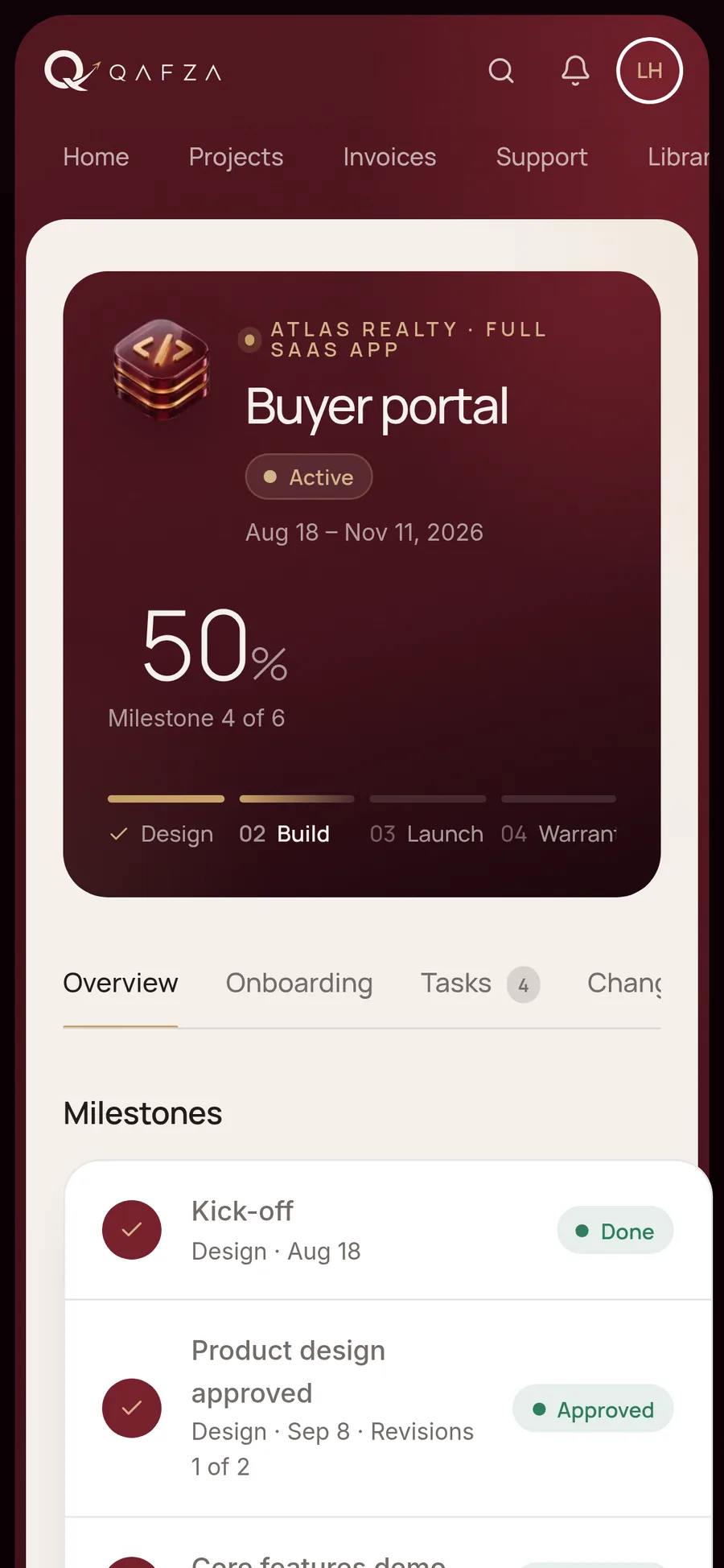
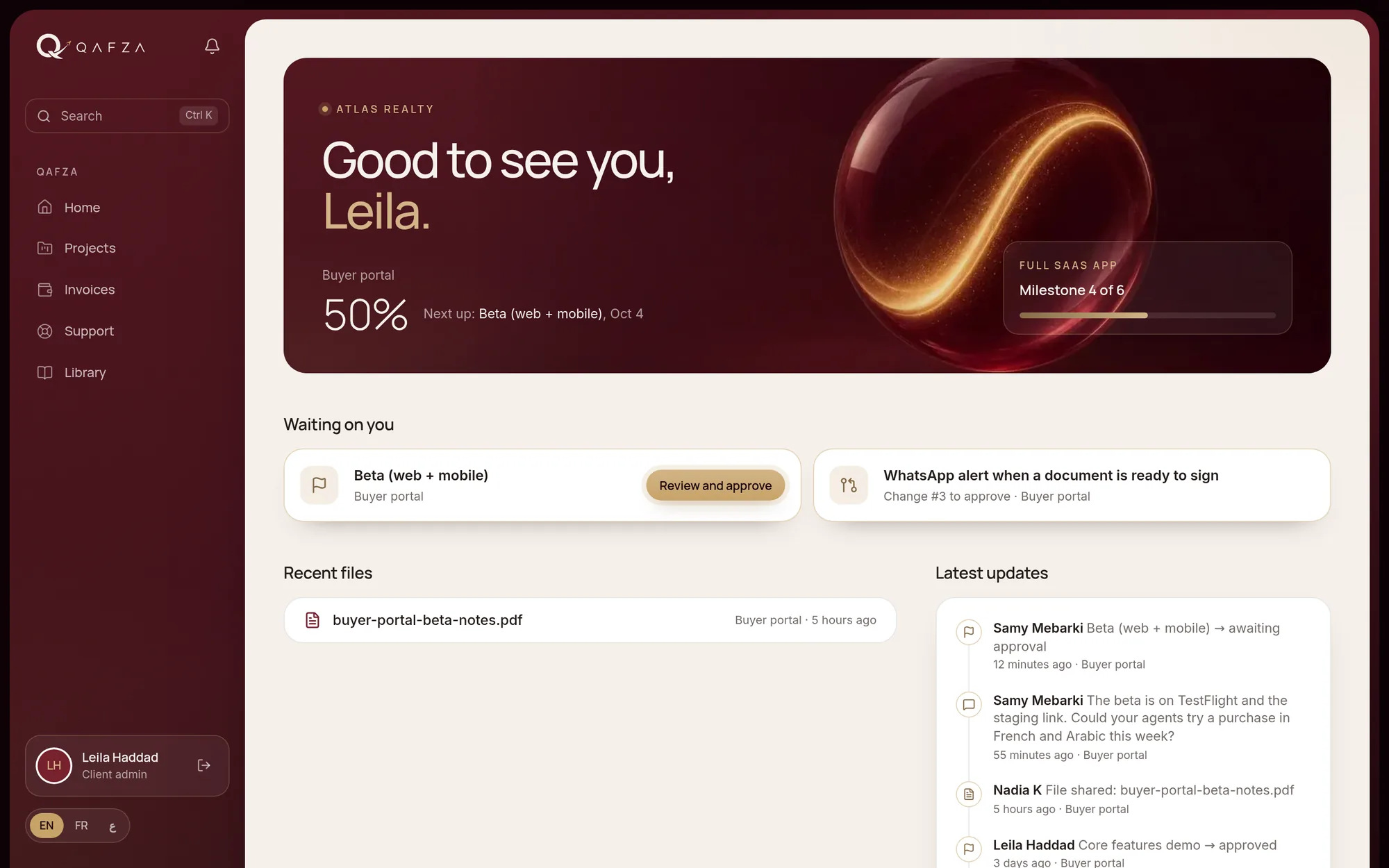
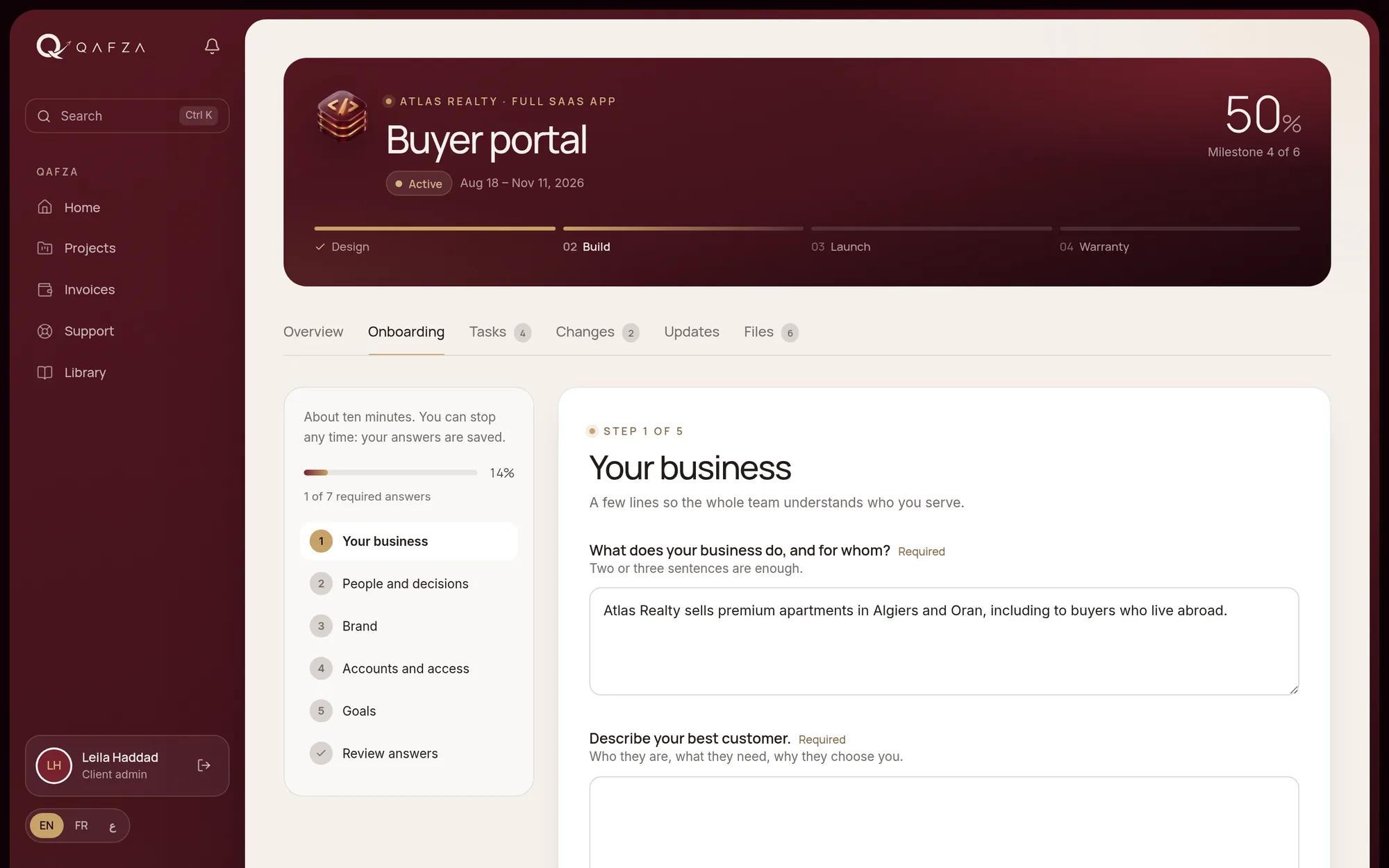
We design and build websites, platforms and software for Algerian companies. Every project starts with a written proposal: scope, stages, dates, two revision rounds per stage and a list of what is excluded, with a fixed quote. Algerian clients are invoiced in dinars and pay by bank transfer, or in cash with a numbered receipt. Domains, hosting and accounts are in your company's name, and on full payment the code is yours. You follow every stage, approval and change in a private client space, and after launch a Care plan covers hosting, backups, updates and support with set response times. We promise the scope, the dates and the quality, and we measure enquiries, calls and rankings with you. We reply to every request within one business day.
 Business websites in AlgiersTalk about your project
  Preparing a company website?Our free planner covers goals, pages, content, French and Arabic, the domain and the questions to ask an agency before you sign.Get the planner
  Qafza teamOctober 3, 2026