
What a white-label partner does
A white-label development partner builds software that your agency sells and delivers under its own name. You keep the client relationship, the strategy and usually the design. The partner scopes the technical work with you, builds it, tests it and supports it, without appearing in front of your client unless you decide otherwise.
Done well, the client gets one agency, one contact and one standard of quality. Done badly, the agency becomes a messenger between a client it cannot reassure and a developer it cannot control.
When it makes sense
A partner is a good fit when:
- Clients ask for work outside your team's skills, such as SaaS apps, mobile apps or custom platforms.
- Demand comes in waves, and hiring for the peaks would leave people idle between them.
- You want your team to stay focused on what it does best: strategy, design, content, marketing.
- You need to deliver a larger project than usual without delaying the rest of your clients.
It makes less sense when development is the core of what you sell. If most of your revenue depends on a skill, that skill should usually live inside your agency.
What to check before you start
Treat the choice of a partner as you would a key hire. Ask how they work, not only what they have built.
- Scoping: do they scope in writing, with you, before you quote the client? A partner who gives a price without questions will discover the real scope halfway through.
- Dates: do they commit to milestone dates, and how do they report progress between them?
- Quality: how is code reviewed and tested, and what documentation do you receive?
- Code ownership: who owns the code, the designs and the repositories once the project is paid? It should be your agency or your client, in writing.
- Accounts: are domains, hosting, app store and third-party accounts set up in the client's or agency's name, not the partner's?
- Confidentiality: will they sign a confidentiality agreement covering your clients, your prices and your methods?
- Support after launch: what is covered, how requests are handled and what the response times are.
Staying invisible to the end client
White-label means the partner works under your brand. Check that this holds in practice, not only in the contract:
- No contact with your client unless you arrange it, and then under your agency's name.
- No credits, footer links, comments or portfolio use that reveal the partner.
- Staging addresses, repository names, emails and documents in your agency's name.
- No approach to your client for future work, written into the agreement.
Whether you tell your clients that you work with partners is your decision; many agencies do, and clients rarely mind. What matters is that the client always deals with your agency and that your agency stays accountable for the result.
The client hired your agency. Whoever writes the code, your agency answers for it.
How the handoff works
A clear sequence avoids most of the friction between agency, partner and client:
- Brief: you share the client's goals, your designs or wireframes and any constraints.
- Partner scoping: the partner asks questions and returns a written scope, phases, dates and their price to you.
- Your proposal: you build the client proposal on that scope, with your own margin and terms.
- Kickoff: the partner joins your internal kickoff; the client meets your agency.
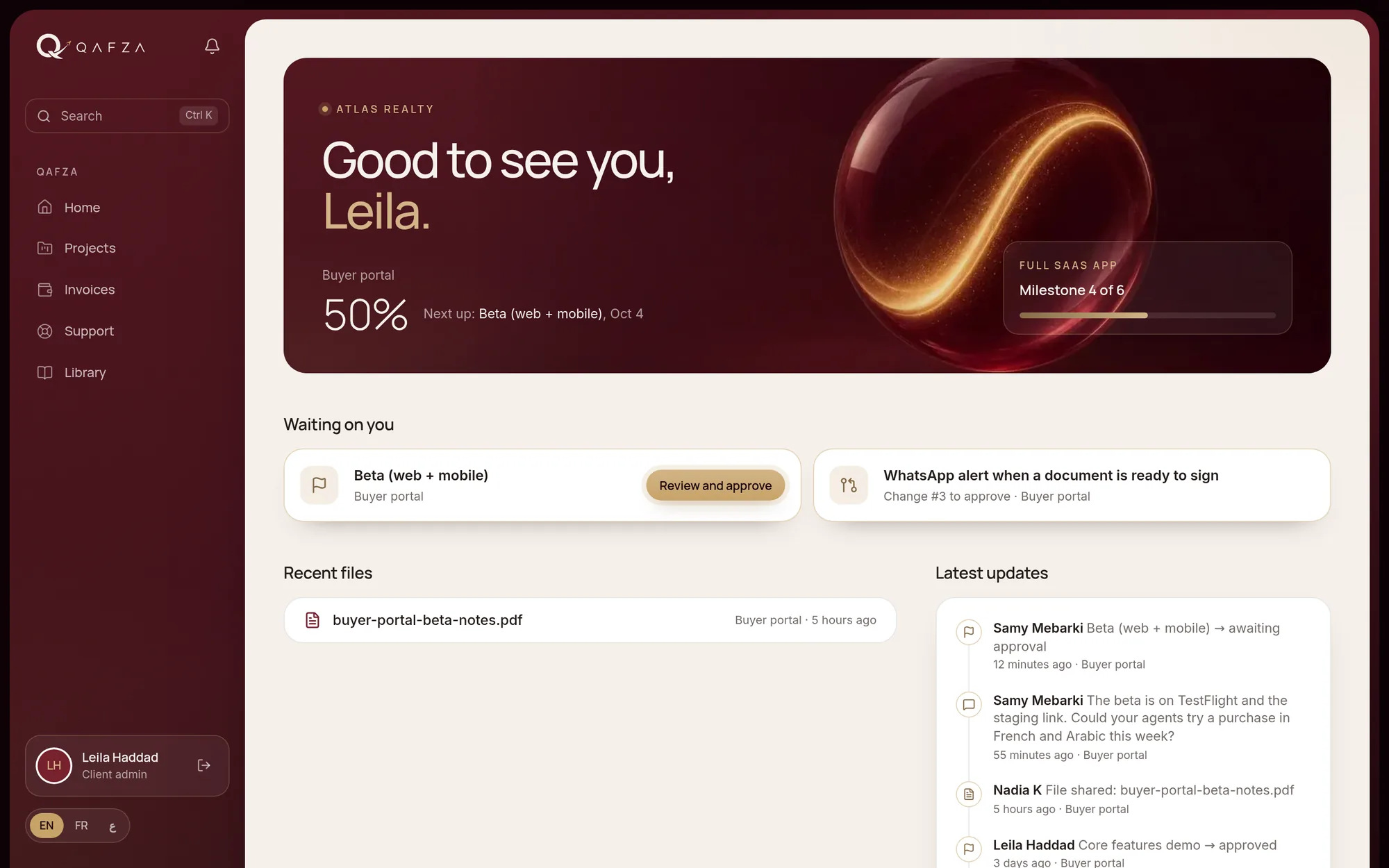
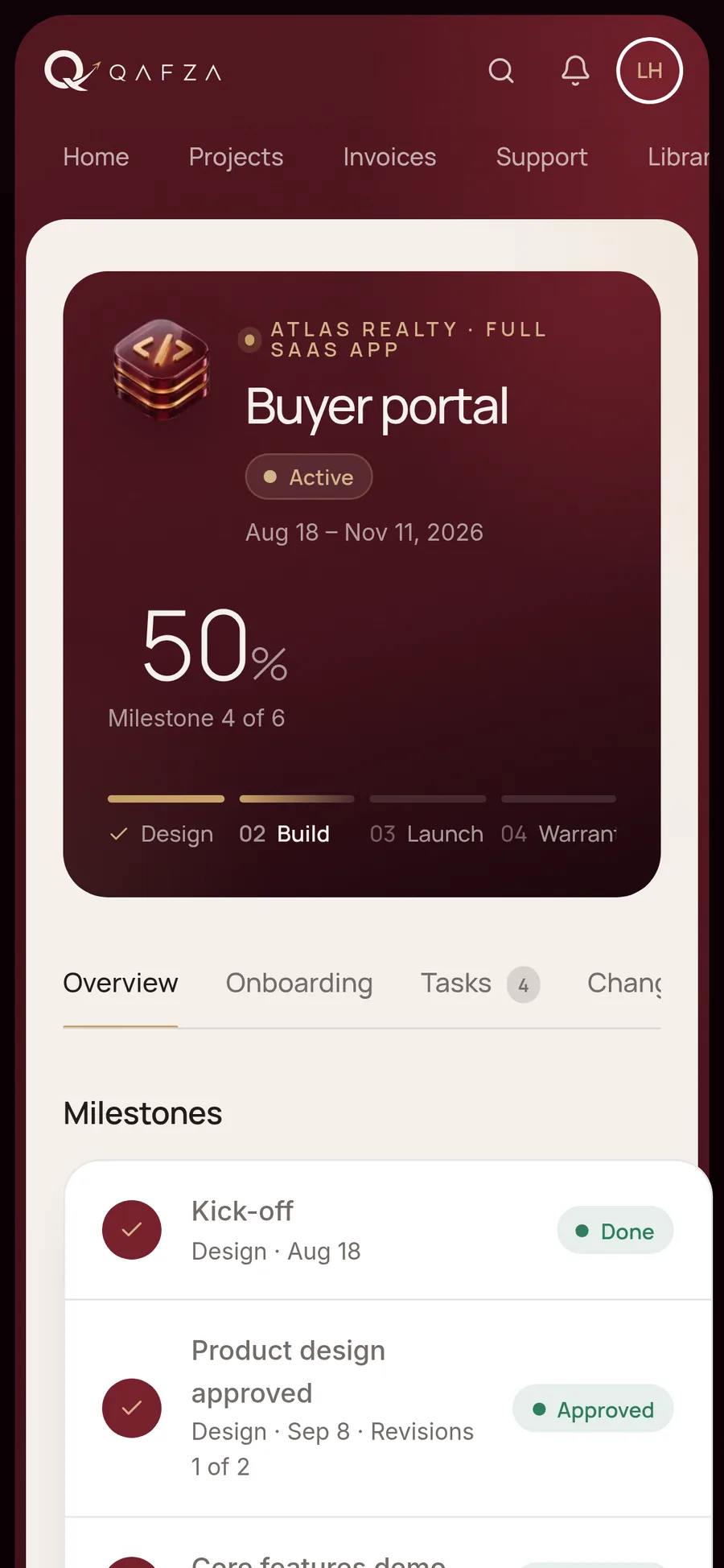
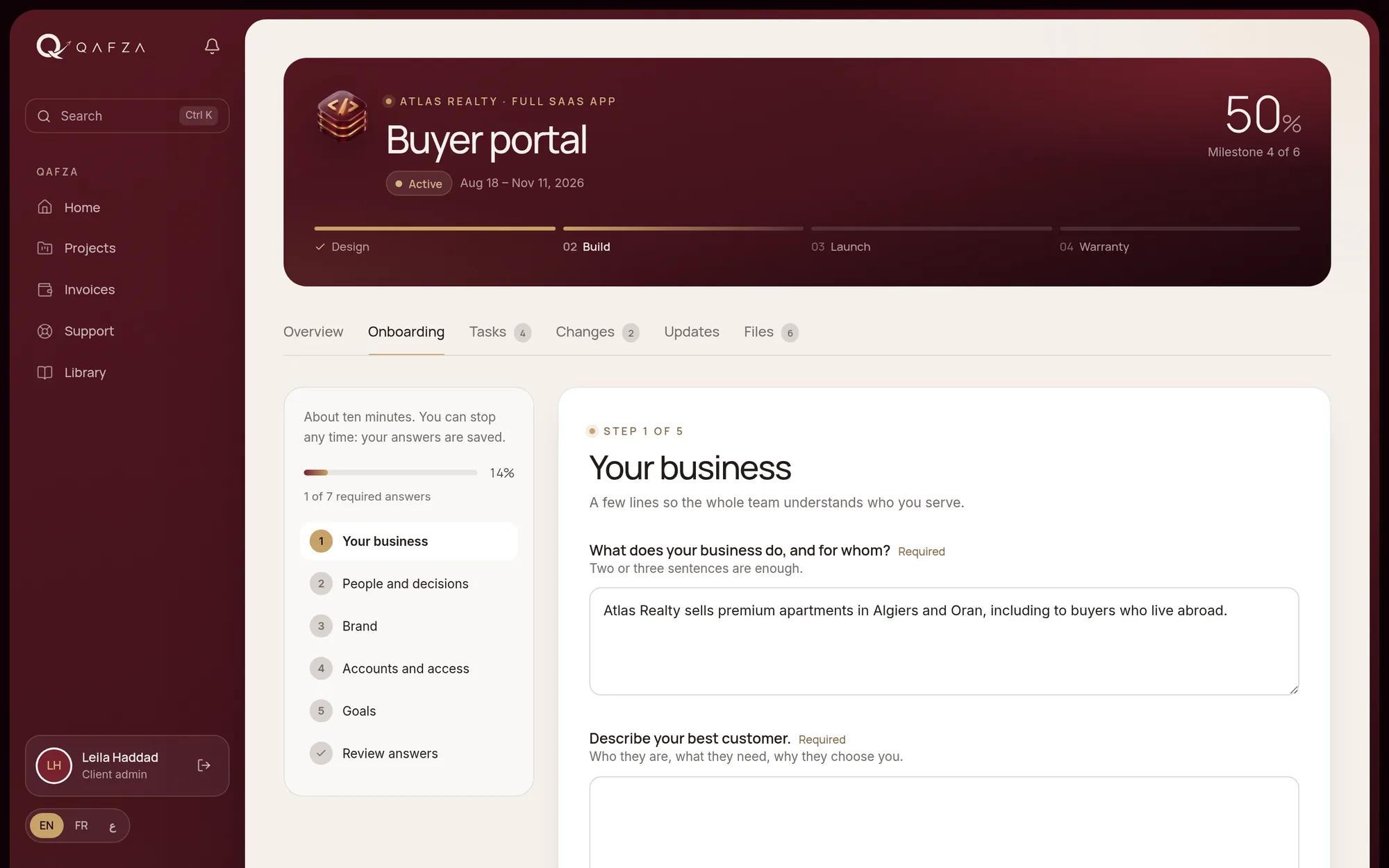
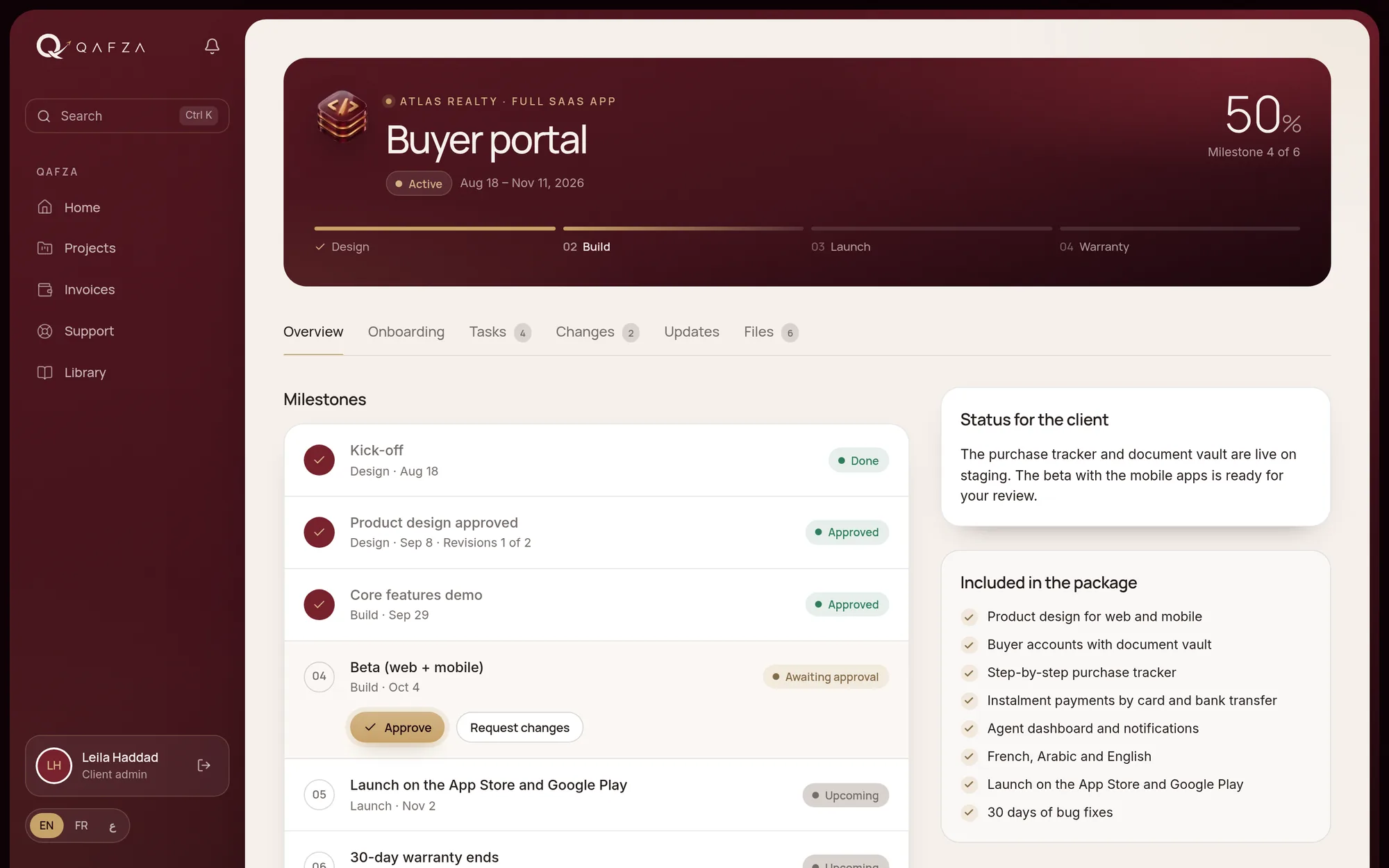
- Milestones: each delivery comes to you first for review, then goes to the client under your name.
- Launch and handover: code, documentation and access are handed over to you or the client, as agreed.
- Support: the partner handles technical requests behind your support channel, within the agreed response times.
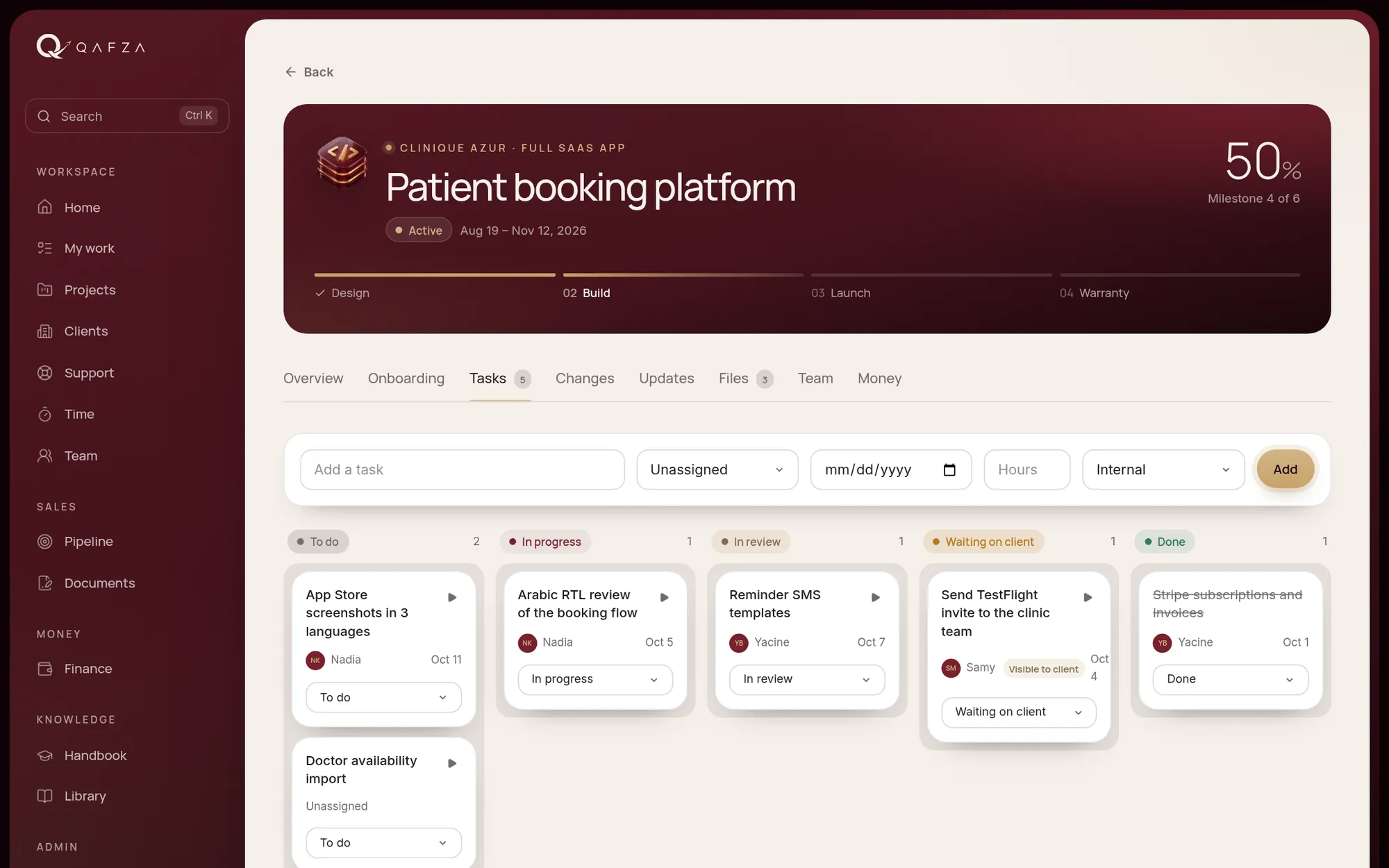
Agree in advance who decides what. Your agency owns the client's priorities and approvals; the partner owns technical choices, within the agreed scope. Changes go through a change request on both sides, so your price to the client and the partner's price to you move together.
How the partner is paid
Ask the partner for a fixed price per scoped project, with the same change request rules you use with your clients. Your margin is yours to set; the partner does not need to know what you charge the client. Agree payment terms that follow your own client's schedule, for example a payment per milestone once your client has approved it, so money does not leave your agency long before it comes in.
Set a working rhythm too: a shared channel between your team and the partner, a short written progress note each week and one named contact on each side. Most problems with partners start as silence.
Red flags
- A price given before any questions about scope.
- No written milestones or dates, only an overall deadline.
- Reluctance to put code ownership and confidentiality in writing.
- Accounts or repositories kept in the partner's name.
- Requests to speak directly with your client "to save time".
- Promises about results they cannot control, such as rankings or user numbers.
- Silence between milestones, or progress you only see at the end.
Start with one project
Before you route all your development through a partner, run one project together, ideally one with a clear scope and a forgiving client. Watch how they scope, how they report and how they handle the first problem. That project tells you more than any portfolio.
Qafza's partner program
Qafza builds websites, web applications and SaaS products, and works as a white-label development partner for design, marketing and SEO agencies. Through Qafza's partner program, agencies get a written scope and price before they quote, milestone dates, code and accounts in their or their client's name, confidentiality, no contact with the end client unless the agency asks, and support after launch with set response times. We commit to scope, dates, quality and response times; your agency keeps the client.
 Sell the app. We build it under your name.Apply to partner
  Free: the client onboarding kitWelcome email, questions per service, access checklist, kickoff agenda and first-week plan.Get the kit
  Qafza teamOctober 7, 2026